
Posted At: Aug 07, 2026 - 16 Views

Navigating the world of smart glasses manufacturing can feel overwhelming, especially when you encounter industry terminology like ODM and OEM. If you're a B2B buyer, distributor, or brand manager looking to source smart glasses from China, understanding these two manufacturing models is essential to making the right partnership decision.
The choice between ODM (Original Design Manufacturer) and OEM (Original Equipment Manufacturer) directly impacts your product development timeline, upfront investment, level of customization, and long-term brand differentiation. This guide breaks down everything you need to know to choose the model that aligns with your business goals.
What is OEM in Smart Glasses Manufacturing?
OEM, or Original Equipment Manufacturer, refers to a manufacturing partnership where the factory produces devices based on your exact specifications and designs. When you work with a smart glasses OEM partner, you provide the technical drawings, circuit schematics, industrial design files, and detailed requirements. The manufacturer then assembles and tests your products using their production facilities and workforce.
This model gives you complete control over every aspect of the product. From the lens technology and frame geometry to the Bluetooth firmware and touch controls, your specifications drive the entire production process. OEM partnerships are ideal for brands that have already invested heavily in research and development or those with unique technological requirements that off-the-shelf designs cannot accommodate.
What is ODM in Smart Glasses Manufacturing?
ODM, or Original Design Manufacturer, represents a different approach where the factory offers pre-designed, ready-to-customize product platforms. An ODM partner maintains a portfolio of existing smart glasses designs that you can select from, then modify with your branding, color preferences, logo placement, and minor feature adjustments.
The ODM model significantly reduces time-to-market because the core engineering, optical testing, and prototype validation have already been completed. You essentially choose a foundation design and layer your brand identity on top. This approach works exceptionally well for companies entering the smart wearables market quickly or brands with limited engineering resources.
Key Differences: ODM vs OEM at a Glance
| Factor | OEM Model | ODM Model |
|---|---|---|
| Design Ownership | Buyer owns all designs | Manufacturer retains base design rights |
| Customization Level | Full customization possible | Limited to cosmetic and minor feature changes |
| Development Time | 12-18 months typically | 3-6 months typically |
| Upfront Investment | Higher (tooling, engineering) | Lower (platform already developed) |
| MOQ Requirements | Generally higher | More flexible options available |
| IP Protection | Stronger (full ownership) | Moderate (shared design base) |
When to Choose OEM for Your Smart Glasses
The OEM model becomes the clear winner under several business scenarios. If your company possesses proprietary technology, patented optical systems, or specialized audio solutions that form the core of your competitive advantage, OEM manufacturing preserves that intellectual property exclusively for your brand.
Consider OEM when you have a dedicated engineering team capable of creating detailed technical specifications. Your in-house expertise ensures that the factory implements your vision precisely, without the compromises that sometimes come from adapting existing platforms. Major consumer electronics brands with established R&D departments typically favor OEM relationships for complete design control.
OEM partnerships also make sense when you anticipate high production volumes over several years. The upfront investment in tooling and engineering gets amortized across larger order quantities, making per-unit costs more favorable. If you're building a flagship product intended to define your brand identity for years to come, the OEM route provides the foundation for that long-term strategy.
For example, brands developing specialized industrial smart glasses with unique safety certifications or medical-grade optical components almost always require OEM partnerships because existing ODM platforms cannot meet those stringent specifications.
When to Choose ODM for Your Smart Glasses
ODM manufacturing excels when speed and cost efficiency take priority over complete design exclusivity. If you're testing a new product category, validating market demand, or launching a product line quickly to meet seasonal retail windows, ODM platforms offer the fastest path from concept to customer delivery.
Startups and smaller brands with constrained budgets often find ODM manufacturing more accessible. The reduced upfront investment means you can bring professional smart glasses to market without the six-figure engineering and tooling budgets that OEM partnerships typically require. Many successful e-commerce brands have used ODM products to validate demand before investing in fully customized OEM designs.
Consider ODM when your customization needs are primarily cosmetic. If your requirements center on specific frame colors, logo engravings, retail packaging design, and minor feature toggles while keeping the core technology intact, ODM platforms deliver everything you need at a fraction of the OEM development cost and timeline.
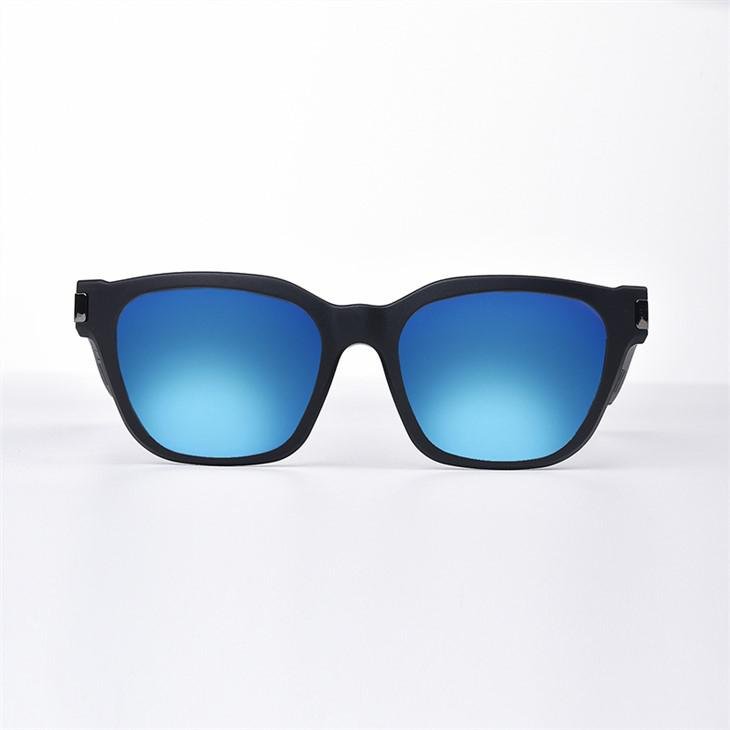
The market also sees strong ODM adoption for product line extensions. Established eyewear brands adding smart features to their existing collection often prefer ODM platforms that complement their current aesthetic without requiring completely new supply chain infrastructure.
Cost Considerations for B2B Buyers
Understanding the total cost of ownership for each model helps you make financially sound decisions. OEM manufacturing involves several cost components that ODM partnerships may reduce or eliminate entirely.
OEM Cost Structure:
- Engineering design fees and prototype iterations
- Tooling and mold fabrication for custom components
- Custom PCB development and testing
- Optical system design and lens tooling
- Quality assurance protocol development
- Certification testing (FCC, CE, RoHS) for custom designs
ODM Cost Structure:
- Platform licensing or selection fees
- Custom branding and packaging costs
- Minor feature modification engineering
- Logo tooling and color batch minimums
- Standard certification already completed
While ODM products typically carry higher per-unit margins for the manufacturer (which may translate to higher prices for you), the dramatically lower initial investment often results in better overall return on investment for smaller order volumes or shorter product lifecycles.
Quality Control Factors
Both manufacturing models require rigorous quality control processes, but the nature of quality assurance differs between them.
With OEM manufacturing, you bear greater responsibility for defining quality standards. Your specifications must be precise and detailed enough that the factory understands exactly what constitutes an acceptable product. This requires more involvement in the production process, including factory inspections, in-line testing oversight, and pre-shipment inspections conducted to your specific protocols.
ODM quality control tends to be more standardized because the products have already undergone extensive validation and production refinement. The manufacturer has already worked out manufacturing variables, and quality processes are typically more mature. However, you must clearly communicate any customization-related quality requirements to ensure your brand-specific modifications meet your standards.
Regardless of which model you choose, requesting product samples, conducting pilot production runs, and establishing clear acceptance criteria before mass production are essential practices that protect your investment and brand reputation.
Evaluating Smart Glasses Manufacturers in China
Whether you ultimately choose ODM or OEM manufacturing, selecting the right partner determines your success. Look for manufacturers with demonstrated experience in smart wearables, not just general electronics assembly. Smart glasses require specialized expertise in miniaturization, optical integration, and audio engineering that general contract manufacturers may lack.
Assess the manufacturer's certification portfolio, including ISO 9001 quality management, ISO 13485 for medical devices if applicable, and relevant product safety certifications. Visit facilities when possible, or engage third-party inspection services to verify production capabilities, workforce competence, and quality management system effectiveness.
Communication efficiency matters enormously when working with overseas manufacturers. Evaluate response times, language capabilities, and the availability of dedicated account managers who understand both your business requirements and the technical complexities of smart glasses production.
Making Your Final Decision
The ODM versus OEM decision ultimately reflects your brand's strategic priorities, resource availability, and market timing requirements. There is no universally correct answer—only the choice that best serves your specific business context.
If you need to move quickly, operate with limited engineering resources, or test market demand before committing to large-scale customization, ODM manufacturing offers the agility and reduced risk profile your situation requires. The ability to launch professional smart glasses products within months rather than years can provide decisive competitive advantages in fast-moving markets.
If proprietary technology, complete design differentiation, and long-term brand building take priority, OEM manufacturing provides the foundation for achieving those objectives. The higher upfront investment protects your intellectual property and creates barriers to competitor imitation that shared ODM platforms cannot match.
Many successful smart glasses brands begin with ODM partnerships to validate market demand, then transition to OEM manufacturing for flagship products once they have established market traction and proven demand at scale. This phased approach minimizes initial risk while preserving options for deeper customization as your business matures.
Ready to explore your smart glasses manufacturing options? Our experienced team at Smart Glasses Factory specializes in both ODM and OEM partnerships, helping B2B buyers find the manufacturing model that aligns with their product vision and business objectives. Share your requirements today, and let's discuss how we can bring your smart glasses to market efficiently and profitably.
