
Posted At: Sep 22, 2026 - 25 Views

The landscape of augmented reality and mixed reality devices has evolved dramatically in recent years, with display technology serving as the cornerstone of user experience quality. Among the various microdisplay technologies competing for dominance in the smart glasses market, Silicon-based Organic Light-Emitting Diode (Si-OLED) technology has emerged as a compelling solution that delivers exceptional color performance and contrast ratios. For B2B buyers, distributors, and brands evaluating smart glasses manufacturing partners in China, understanding the technical advantages of Si-OLED displays becomes essential for making informed product development decisions.
What is Si-OLED Display Technology?
Si-OLED represents a specialized implementation of OLED technology designed specifically for near-eye display applications. Unlike traditional OLED panels that use glass or plastic substrates, Si-OLED microdisplays utilize silicon wafers as the backplane material. This fundamental architectural choice enables dramatically higher pixel densities in a fraction of the physical footprint, making Si-OLED displays ideally suited for integration into sleek, consumer-friendly smart glasses form factors.
The technology combines the self-emissive properties of organic light-emitting compounds with the precise thin-film transistor control provided by silicon-based electronics. Each pixel generates its own light, eliminating the need for separate backlighting and enabling true blacks through complete pixel illumination shutdown. This architectural advantage translates directly into the exceptional contrast ratios that define the Si-OLED viewing experience.
The Science Behind Superior Color Performance
Color reproduction quality in display technology depends on multiple interconnected factors, including color gamut coverage, color accuracy, and luminance consistency across the brightness spectrum. Si-OLED technology excels in each of these dimensions, delivering visual performance that meets the demanding requirements of augmented reality applications where virtual content must seamlessly blend with the real world.
The organic emissive layers in Si-OLED displays can be precisely engineered to produce specific wavelengths of light. Modern Si-OLED panels typically achieve color gamuts exceeding 100% of the sRGB color space, with some advanced implementations reaching 90% or higher coverage of the wider DCI-P3 color space used in cinema and premium content creation. This expanded color range enables more vibrant, saturated hues that enhance the visual appeal of AR overlays and mixed reality content.
Contrast Ratios That Define Premium Experiences
Contrast ratio, the relationship between the brightest white and darkest black a display can produce, represents one of the most significant differentiators between display technologies. Si-OLED displays achieve contrast ratios that were previously impossible in compact microdisplay form factors, typically exceeding 100,000:1 and often reaching into the millions:1 range under optimal conditions.
This remarkable contrast performance stems directly from the self-emissive nature of OLED technology. When a pixel needs to display black, it simply ceases all light emission, creating a true void of illumination. This stands in stark contrast to LCD technologies, which require backlight filtering and inevitably allow some light leakage, resulting in grayed blacks and reduced perceived contrast.
For augmented reality smart glasses, high contrast ratios prove particularly valuable. Virtual objects must compete with ambient lighting conditions and real-world scenes viewed through optical combiners. A display capable of producing bright, punchy highlights against deep, true blacks ensures that AR content remains visible and legible across diverse lighting environments, from dimly lit interiors to bright outdoor settings.
Si-OLED vs. Competing Microdisplay Technologies
The smart glasses display market features several competing technologies, each with distinct characteristics that influence their suitability for different applications. Understanding how Si-OLED compares to alternatives helps B2B buyers select the most appropriate technology for their target use cases and price points.
| Feature | Si-OLED | LCoS | MicroLED | LBS (Laser) |
|---|---|---|---|---|
| Typical Contrast Ratio | 100,000:1+ | 1,000:1 to 5,000:1 | Very High | High |
| Color Gamut | 100%+ sRGB | 70-90% sRGB | Varies | Varies |
| Form Factor | Ultra-compact | Compact | Compact | Very Compact |
| Power Consumption | Moderate | Moderate | Low | Very Low |
| Maturity Level | Production-ready | Very Mature | Emerging | Early Adoption |
While each technology offers specific advantages, Si-OLED provides a compelling balance of color performance, contrast ratios, and manufacturing maturity that makes it particularly attractive for brands targeting the premium consumer and professional smart glasses segments.
Manufacturing Advantages for Smart Glasses OEM Production
From an OEM manufacturing perspective, Si-OLED technology offers several practical advantages that influence production efficiency and product reliability. The silicon-based backplane manufacturing process leverages established semiconductor fabrication infrastructure, benefiting from decades of process refinement and yield optimization.
Si-OLED microdisplays integrate directly with waveguide-based optical combiners, enabling the creation of slim, glasses-like form factors that appeal to consumers. The self-emissive nature of the technology simplifies optical system design by eliminating the need for complex backlight assemblies and lightguides that add thickness and complexity to smart glasses constructions.
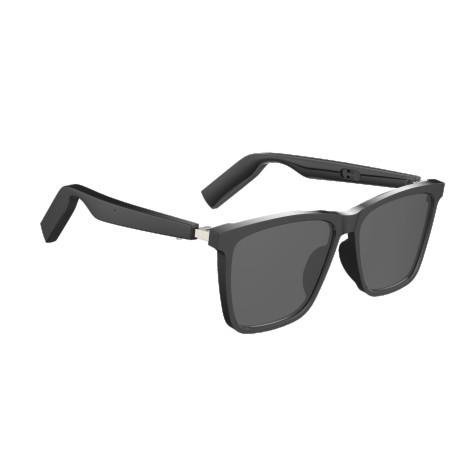
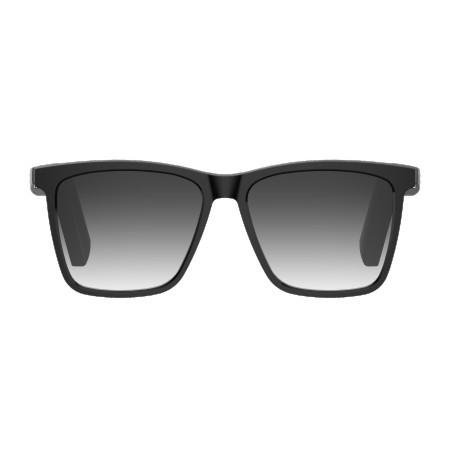
Explore our range of Music Smart Sunglasses that showcase how advanced display technologies integrate into consumer-friendly eyewear products.
Brightness Optimization for Indoor and Outdoor Use
Achieving satisfactory display visibility across diverse lighting conditions remains one of the primary challenges in smart glasses design. Si-OLED technology addresses this through its ability to achieve high peak luminance levels while maintaining energy efficiency appropriate for battery-powered wearable devices.
Modern Si-OLED microdisplays commonly achieve brightness levels between 1,000 and 5,000 nits, with some specialized implementations reaching even higher peaks. This luminance headroom proves essential for outdoor use cases where competing sunlight illumination can wash out lower-brightness displays. When combined with appropriate optical combiners and tinting options, Si-OLED-powered smart glasses deliver consistent visual performance across the full spectrum of real-world lighting environments.
The relationship between display brightness and power consumption requires careful engineering tradeoffs. Si-OLED technology enables efficient power management through localized brightness control, where only pixels requiring high luminance consume elevated power. This approach extends battery life in portable smart glasses while maintaining the ability to deliver peak brightness when content demands it.
Color Consistency and Calibration Considerations
Manufacturing consistency represents a critical concern for brands planning large-scale production of smart glasses products. Si-OLED displays can be precisely calibrated during production to ensure color consistency across units, an important factor for brands that prioritize uniform visual experiences across their product portfolio.
The organic materials used in OLED displays can exhibit slight variations in spectral output and efficiency over time and temperature. However, modern Si-OLED manufacturing processes incorporate sophisticated compensation algorithms and tight process controls that minimize these variations, ensuring reliable color performance throughout the product lifecycle and across production batches.
Future Development Trajectory
The Si-OLED technology roadmap continues to advance, with research and development efforts focused on improving efficiency, extending color gamut capabilities, and reducing manufacturing costs. Upcoming generations of Si-OLED microdisplays promise further improvements in pixel density, enabling even more immersive visual experiences with finer detail reproduction.
Materials science breakthroughs are expected to enhance the longevity and stability of organic emissive layers, addressing historical concerns about OLED lifespan in demanding applications. These improvements will further solidify Si-OLED's position as a leading display technology for the next generation of consumer and professional smart glasses products.
Making Technology Selection Decisions for Your Smart Glasses Product
Selecting the appropriate display technology for a smart glasses product requires balancing multiple technical, commercial, and strategic considerations. Si-OLED technology offers a mature, production-ready solution that delivers the color performance and contrast ratios required for premium augmented reality experiences while enabling the compact, stylish form factors that consumers increasingly demand.
Partnering with an experienced smart glasses manufacturer that possesses deep expertise in Si-OLED integration provides significant advantages during product development. Our engineering team has accumulated extensive experience optimizing Si-OLED display performance, optical system design, and manufacturing processes for volume production of consumer-facing smart glasses products.
Whether you are developing next-generation AR glasses for professional applications, entertainment-focused smart eyewear for the gaming market, or everyday wearable devices that blend functionality with fashion, Si-OLED technology provides the visual performance foundation that enables compelling user experiences.
Partner with Experts in Smart Glasses Manufacturing
The rapid evolution of display technology creates both opportunities and challenges for brands entering the smart glasses market. Making informed technology selection decisions requires access to current technical expertise, manufacturing capabilities, and supply chain relationships that can be difficult to develop independently.
Our smart glasses factory maintains strong partnerships with leading Si-OLED display manufacturers, ensuring reliable access to high-quality microdisplay components for our OEM and ODM production programs. Combined with our comprehensive capabilities in industrial design, hardware engineering, firmware development, and volume manufacturing, we provide end-to-end support for bringing smart glasses products to market.
Ready to explore how Si-OLED technology can elevate your smart glasses product concept? Browse our product catalog to see examples of our manufacturing capabilities, and contact our team to discuss your specific requirements and timeline. We welcome the opportunity to help transform your vision into a market-ready product that delivers exceptional visual experiences through industry-leading display technology.
