
Posted At: Mar 30, 2026 - 3,257 Views

The global smart glasses market continues expanding as brands seek innovative wearable technology to add to their product portfolios. For businesses, distributors, and entrepreneurs looking to source these products, understanding where and how to purchase smart glasses at scale becomes a critical strategic decision. Whether you represent an established brand exploring new categories or a startup ready to launch your own smart eyewear line, the path to procurement leads through a network of manufacturers, trading companies, and specialized factories primarily based in China.
Sourcing smart glasses differs significantly from purchasing consumer electronics off-the-shelf. The process involves evaluating manufacturing capabilities, navigating customization options, and establishing partnerships that can support your long-term business objectives. This comprehensive guide breaks down the primary purchase channels, helping you identify the most suitable options for your specific needs.
Understanding the Smart Glasses Sourcing Landscape
China remains the dominant hub for smart glasses manufacturing, with concentrated production facilities in Shenzhen, Dongguan, and surrounding Pearl River Delta cities. These factories possess the technical expertise, component supply chains, and production capacity required to fulfill orders ranging from small batches of a few hundred units to massive orders exceeding hundreds of thousands. The manufacturing ecosystem includes pure-play factories focused solely on production, design houses offering turnkey solutions, and trading companies that broker relationships between buyers and manufacturers.
When considering where to purchase smart glasses, you will encounter three primary sourcing models: OEM (Original Equipment Manufacturing), ODM (Original Design Manufacturing), and standard wholesale purchasing. Each approach carries distinct advantages, cost structures, and partnership requirements that align with different business strategies.
OEM Smart Glasses Manufacturing
OEM partnerships represent the most common approach for brands seeking to create proprietary smart glasses products. Under this model, you provide the technical specifications, design schematics, and feature requirements while the manufacturer handles production based on your exact standards. The factory essentially becomes an extension of your supply chain, manufacturing products that bear your brand identity without any identifying marks from the factory itself.
OEM arrangements work best when you have already developed detailed product specifications or have access to engineering teams capable of defining technical requirements. The manufacturer contributes their production expertise, quality control systems, and component sourcing capabilities while respecting your intellectual property and design ownership. This approach typically requires higher minimum order quantities and longer development timelines compared to standard purchasing, but it results in genuinely unique products that competitors cannot easily replicate.
For brands with established retail channels and strong marketing capabilities, OEM partnerships provide maximum differentiation potential. You control every aspect of the product, from frame geometry to software functionality, ensuring complete alignment with your brand positioning and target customer expectations.
ODM Smart Glasses Manufacturing
ODM (Original Design Manufacturing) represents a faster-to-market alternative where manufacturers offer pre-developed product designs that buyers can customize with branding, minor modifications, and packaging adjustments. These factories maintain portfolios of proven smart glasses designs across various categories including audio sunglasses, camera-equipped eyewear, display-enabled devices, and fitness-tracking glasses.
The primary advantage of ODM purchasing lies in accelerated time-to-market. Since designs already exist and have undergone initial testing and refinement, you skip the lengthy development phase and move directly to branding implementation and production scaling. This approach significantly reduces upfront investment and risk while allowing you to establish presence in the smart glasses category relatively quickly.
ODM manufacturers typically offer flexibility in customization parameters including logo placement, color variants, packaging design, and minor feature adjustments. However, fundamental design elements remain fixed since you are adapting existing frameworks rather than creating from scratch. For businesses seeking rapid market entry or testing product-market fit before committing to full OEM development, ODM partnerships offer an attractive middle ground.
Wholesale Smart Glasses Purchasing
For businesses seeking the fastest procurement path, wholesale purchasing from established smart glasses manufacturers provides immediate access to inventory without development timelines or customization processes. Manufacturers maintain ready stock of popular models that you can purchase in lot sizes smaller than typical OEM/ODM minimums, allowing for initial market testing, limited edition releases, or supplemental inventory needs.
Wholesale options prove particularly valuable for distributors, retailers, and e-commerce sellers who need reliable supply without demanding extensive product customization. By purchasing finished goods, you eliminate the complexity of product development oversight while gaining access to proven designs that have already demonstrated market acceptance.
Many wholesale suppliers also offer drop-shipping services, handling fulfillment logistics while you focus on sales and customer acquisition. This arrangement minimizes your inventory risk and operational overhead, though it typically carries lower per-unit margins compared to bulk direct purchasing.
Key Factors When Selecting a Smart Glasses Supplier
Regardless of which sourcing model aligns with your strategy, evaluating potential suppliers requires careful assessment across multiple dimensions. Manufacturing capability serves as the foundational criterion, encompassing production equipment, workforce expertise, quality management systems, and capacity scalability. Requesting factory tour opportunities or virtual facility walkthroughs provides invaluable insight into actual operational standards.
Technical expertise in smart glasses production specifically matters more than general electronics manufacturing experience. These products combine precision optics, wireless communication components, battery systems, and often display technology within compact frames. Suppliers must demonstrate mastery across these interdisciplinary domains, not simply assemble electronic components.
Communication efficiency and language capability directly impact project success, particularly when navigating technical specifications, design modifications, and quality control discussions. Partners who communicate clearly in your primary language reduce misunderstanding risks and accelerate decision-making processes throughout the procurement cycle.
Product Categories Available for B2B Sourcing
Smart glasses manufacturers produce diverse product categories serving different use cases and consumer segments. Understanding these categories helps you align sourcing decisions with your target market requirements.
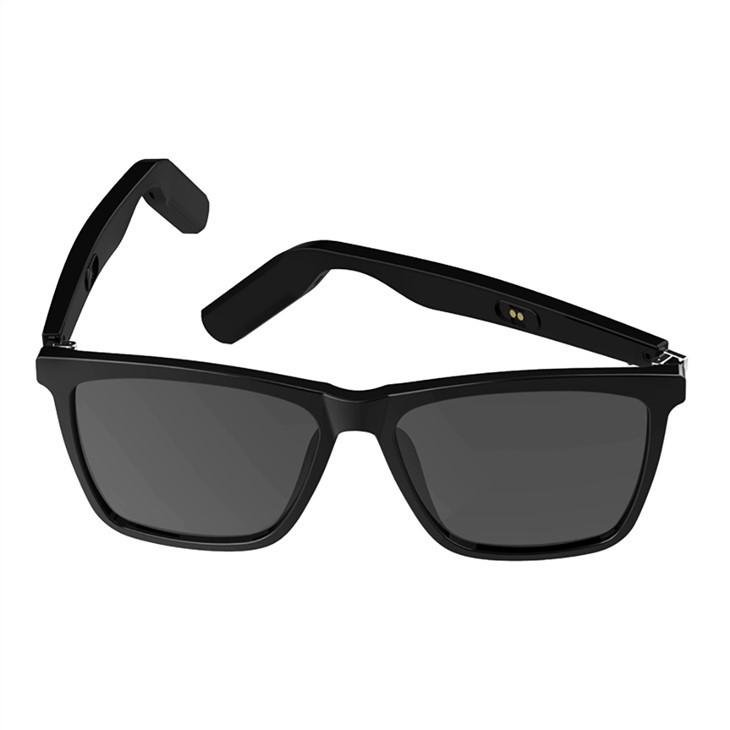
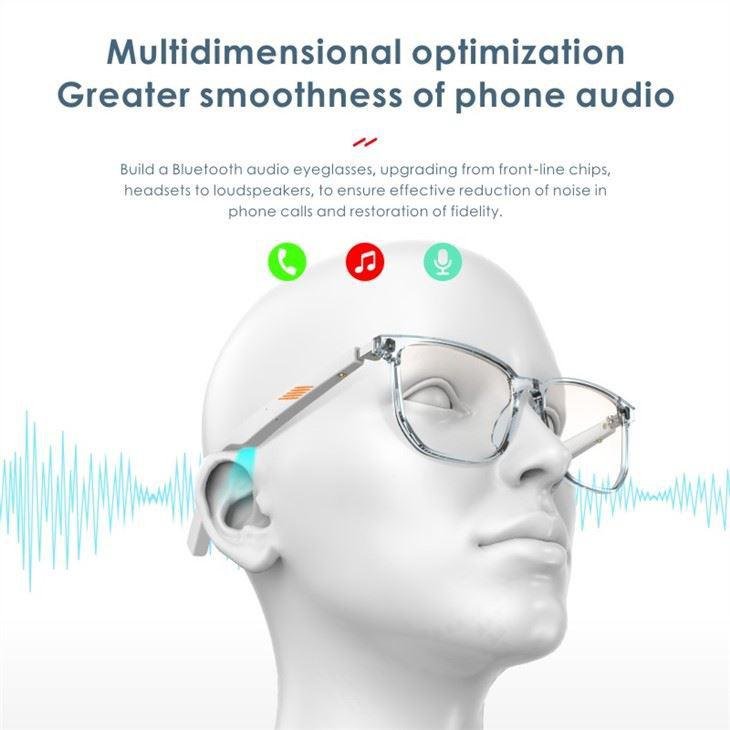
Audio Sunglasses represent the largest segment, integrating bone-conduction or directional speaker systems into stylish eyewear frames. These products appeal to active consumers seeking music and call functionality without earbud intrusion. The Fashion Smart Music Glasses demonstrate how manufacturers balance audio performance with contemporary styling suitable for retail positioning.
Camera-Equipped Smart Glasses capture photos and videos from a first-person perspective, serving content creators, professionals requiring hands-free documentation, and security applications. These models demand careful navigation of privacy regulations in different markets, making regulatory compliance expertise essential for suppliers serving multiple geographic regions.
Display-Enabled AR Glasses overlay digital information onto the physical world, representing the most technically advanced category. These products command premium pricing and typically require substantial development investment, making them suitable primarily for well-capitalized brands targeting early-adopter customer segments.
Evaluating Manufacturing Capabilities and Quality Standards
Quality assurance processes vary significantly across manufacturers, making thorough evaluation essential before committing to substantial orders. Reputable factories implement multi-stage inspection protocols covering incoming component verification, in-process quality checks, and finished product testing. Request documentation of these procedures and, when possible, specify that third-party inspection agencies conduct pre-shipment verification.
Component sourcing practices directly influence product reliability and performance consistency. Leading manufacturers maintain relationships with tier-one suppliers for critical components including Bluetooth modules, batteries, speakers, and optical elements. Inquiring about specific component suppliers demonstrates manufacturing sophistication and helps you assess long-term product quality expectations.
Certifications and compliance documentation indicate manufacturing maturity and market-readiness. Relevant certifications include CE marking for European market access, FCC certification for US market entry, and RoHS compliance for environmental standards. Manufacturers experienced in serving international markets typically maintain readily available certification packages rather than treating compliance as an afterthought.
Understanding Pricing Structures and Order Requirements
Smart glasses pricing encompasses multiple cost components including raw materials, assembly labor, component procurement, quality control, packaging, and logistics. Understanding these elements helps you evaluate quote reasonableness and identify potential cost optimization opportunities.
| Order Quantity | Typical Lead Time | Per-Unit Cost Range | Customization Level |
|---|---|---|---|
| 100-500 units | 3-4 weeks | Premium pricing | Logo + packaging only |
| 500-2,000 units | 4-6 weeks | Moderate pricing | Limited modifications |
| 2,000-10,000 units | 6-8 weeks | Competitive pricing | Moderate customization |
| 10,000+ units | 8-12 weeks | Volume pricing | Full OEM customization |
Minimum order quantities (MOQs) vary by manufacturer and product complexity, typically ranging from 100 units for basic models to 500+ units for more advanced smart glasses with display or camera functionality. When starting with a new supplier, beginning with smaller orders to validate quality and partnership dynamics before scaling volume represents prudent risk management.
Payment terms typically involve deposit requirements (often 30-50% upfront) with balance payment prior to shipment. Established factory relationships may unlock more favorable terms as trust develops over multiple successful transactions. Be cautious of suppliers demanding full payment upfront without established track record, as this arrangement leaves you vulnerable if production issues arise.
Navigating Communication and Project Management
Effective communication structures significantly influence sourcing success, particularly when coordinating across time zones and cultural contexts. Establishing clear communication protocols from project initiation helps prevent misunderstandings that could derail timelines or compromise product quality.
Design documentation requires particular attention to detail when working with international suppliers. Technical specifications should include visual references, exact measurements, material requirements, and performance benchmarks. Ambiguity in documentation translates directly into production errors, making investment in comprehensive specification development worthwhile.
Regular progress updates throughout production allow early identification of potential issues before they become costly problems. Request photos or video documentation at key production milestones, particularly for first orders with new suppliers. This documentation serves both quality verification and future reference purposes.
Logistics and Delivery Considerations
Shipping smart glasses from China involves navigating export regulations, customs procedures, and international logistics networks. Understanding these complexities helps you plan realistic delivery timelines and accurately calculate landed costs.
For smaller orders, express shipping services provide door-to-door delivery within 5-7 business days, though costs accumulate quickly for heavier shipments. Sea freight offers significant cost advantages for larger orders, with transit times of 3-6 weeks depending on destination port. Air freight balances speed and cost for medium-sized shipments where sea transit would create unacceptable delays.
Incoterms (International Commercial Terms) define buyer-seller responsibilities regarding shipping costs, insurance, customs duties, and risk transfer points. Common terms for Chinese manufacturing imports include FOB (Free on Board) where seller handles delivery to departure port, and CIF (Cost, Insurance, and Freight) where seller covers shipping and insurance to destination port. Clarify incoterms explicitly during quotation requests to ensure accurate total cost comparison.
Building Long-Term Supplier Relationships
Initial procurement transactions represent the foundation for potentially valuable long-term partnerships. Demonstrating professionalism, honoring commitments, and maintaining transparent communication establishes trust that translates into preferential treatment, pricing flexibility, and priority production scheduling in subsequent orders.
Suppliers who view you as a valued long-term partner rather than a one-time transaction provide greater support during challenging situations. Production delays, quality concerns, or component shortages affect all manufacturers occasionally. Relationship strength determines how collaboratively suppliers navigate these challenges when they arise.
Consider scheduling periodic in-person visits when business volumes justify the investment. Face-to-face relationship building maintains connection depth that purely digital communication cannot replicate. Many successful sourcing partnerships include annual visits where buyers tour facilities, review upcoming product development, and strengthen personal relationships with supplier management teams.
Starting Your Smart Glasses Procurement Journey
The smart glasses market presents compelling opportunities for businesses positioned to serve growing consumer demand. Whether you seek audio sunglasses for active lifestyle retail, camera-equipped eyewear for professional applications, or advanced AR displays for cutting-edge experiences, the manufacturing infrastructure exists to support your objectives.
Approaching procurement strategically by clarifying your requirements, evaluating options across sourcing models, and establishing relationships with capable manufacturers positions your business for sustainable success in this dynamic category. The investment in thorough supplier selection and partnership development yields returns through product quality, cost efficiency, and operational reliability throughout your smart glasses business lifecycle.
Ready to explore smart glasses sourcing options tailored to your specific requirements? Our team connects B2B buyers with verified manufacturers capable of supporting your product development and volume production needs. Share your project details and volume expectations to receive customized supplier recommendations matching your criteria.
