
Posted At: Oct 08, 2026 - 250 Views

Managing returns effectively separates successful smart glasses procurement operations from those that hemorrhage profit through hidden costs. For B2B buyers sourcing from China manufacturers, understanding the nuances of stereo Bluetooth music glasses and other smart eyewear returns can mean the difference between a thriving distribution business and one plagued by warranty claims.
Returns in the smart glasses industry carry unique challenges. These devices combine delicate optical components, sensitive electronics, and precision mechanics—all housed in fashion-forward frames that must withstand daily wear. When something goes wrong, whether during shipping, initial use, or after months of operation, your handling protocol determines how quickly you recover value and maintain customer confidence.
Why Smart Glasses Returns Deserve Special Attention
Unlike standard consumer electronics, smart glasses integrate multiple subsystems that can fail independently or interact in unexpected ways. Audio functionality, Bluetooth connectivity, battery performance, optical clarity, and frame durability each represent potential failure points. Add to this the fact that smart glasses sit directly on the face—a highly visible, personal position—and you understand why customers have strong emotional responses to product failures.
For distributors and brands working with OEM partners in China, return handling extends beyond simple customer service. Your protocols directly impact your relationship with manufacturers, your ability to negotiate favorable terms, and your long-term profitability. Manufacturers notice which buyers send back poorly documented returns versus those who provide actionable quality data.
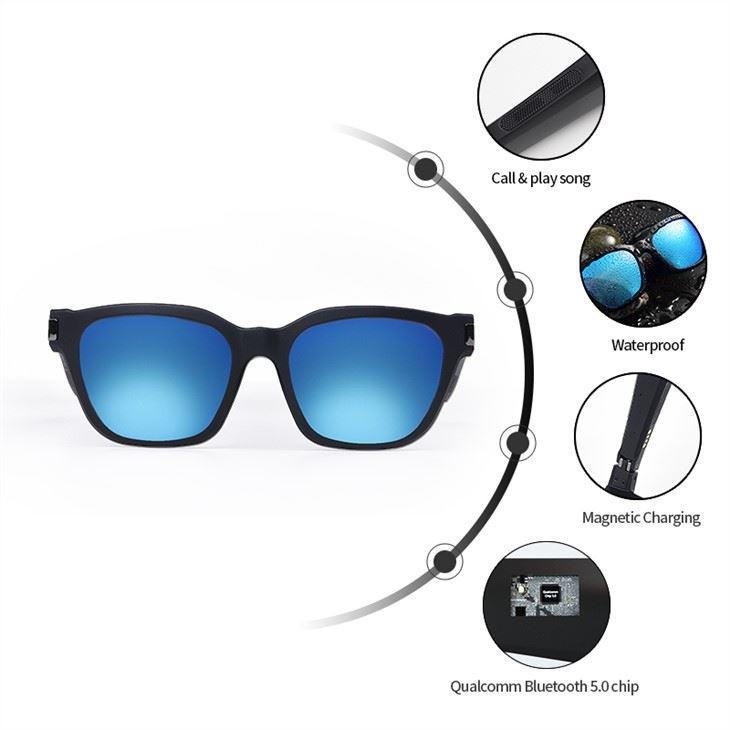
Pre-Shipment Inspection Checklist
Prevention remains the most cost-effective returns strategy. Before any smart glasses leave your warehouse or your manufacturer's facility, standardized inspection catches defects that would otherwise become customer returns.
Functional Testing Protocol
- Power on each unit and verify battery indicator shows appropriate charge level
- Test Bluetooth pairing with at least two devices (smartphone and laptop)
- Verify audio output from both speakers—check for distortion, crackling, or silence
- Confirm touch controls respond correctly to all gestures
- Test microphone clarity during voice calls
- Verify any companion app connections and firmware update capability
- Check all charging functions including USB-C or magnetic connectors
Physical Inspection Standards
- Examine frame alignment—temples should close evenly without resistance
- Verify hinge tension meets specification (not too loose, not binding)
- Check lens clarity for scratches, bubbles, or coating imperfections
- Confirm polarized or tinted lens quality under lighting conditions matching intended use
- Inspect all seams and joins for gaps or excess adhesive
- Verify logo placement, text printing, and decorative elements meet quality standards
- Check that temple tips are properly finished without sharp edges
Packaging Verification
- Confirm protective film is applied to all lenses
- Verify glasses sit securely in molded inserts
- Check that accessories (charging cable, carrying case, documentation) are present
- Confirm sealed packaging shows no signs of tampering
- Verify batch numbers and manufacturing dates are correctly labeled
Customer Return Request Documentation
Every return request should generate a complete documentation file before processing begins. This file serves multiple purposes: it enables accurate diagnosis, supports warranty claims with manufacturers, and builds the data foundation for quality improvement.
Required Customer Information
- Original purchase order number and date
- Customer name, company, and contact information
- Product model number and serial/batch code
- Purchase channel (direct, retail, marketplace)
- Proof of purchase documentation
Defect Description Requirements
Train your customer service team to gather specific information. Vague descriptions like "doesn't work" create processing delays and frustrate all parties. Instead, require details that narrow down the problem systematically.
- When did the issue first appear (immediately, after X days, after specific event)?
- Under what conditions does the problem occur (always, intermittently, with specific apps)?
- Has the customer attempted any troubleshooting steps?
- Can the customer provide photos or video of the malfunction?
- Is the issue getting worse over time or remaining constant?
Condition Assessment Categories
Classify returns into clear categories that drive appropriate handling:
- Manufacturer Defect: Faulty components, assembly errors, material failures under normal use
- Shipping Damage: Clear physical damage occurring during transit
- Customer Misuse: Damage resulting from improper handling, unauthorized modifications, or use beyond specifications
- Customer Remorse: Functional product returned for non-technical reasons (wrong expectations, found alternatives)
- Unknown/Investigation Required: Cannot determine cause from available information
Return Processing Workflow
Establishing a consistent workflow ensures no returns fall through cracks while enabling rapid response to critical issues.
Initial Receipt Procedures
Upon receiving a returned product, immediately document its arrival. Open and inspect packages in a designated staging area—ideally with photography capability for disputed cases.
- Log receipt date and associate with original customer return request
- Photograph packaging condition before opening
- Verify returned items match original shipment (model, quantity, accessories)
- Note any visible damage not consistent with reported issue
- Assign internal tracking number for reference
Diagnostic Testing Sequence
Conduct systematic diagnostic testing on all returned units, regardless of reported issue. This reveals secondary problems and builds comprehensive quality data.
- External inspection—document all physical findings
- Basic function test without charging (assess battery holding charge)
- Full charge cycle with monitoring
- Connectivity testing across supported protocols
- Audio system comprehensive evaluation
- Optical component inspection under magnification
- Frame stress testing within normal operating range
- Component-level inspection if defect origin remains unclear
Disposition Decision Framework
After testing, determine the appropriate path for each unit:
- Replace and return to stock: No defect found, unit tests perfectly
- Refurbish: Minor cosmetic issues, functional with cleaning/adjustment
- Component harvest: Partial functionality—salvage usable parts
- Warranty claim: Manufacturer defect confirmed—file with supplier
- Recycle responsibly: Non-functional, non-repairable units
- Return to customer: No defect found, customer responsible
Quality Analysis and Feedback Loop
Individual returns matter, but aggregated return data transforms your quality program. The patterns hiding in your return records reveal systemic issues that, once addressed, dramatically reduce future problems.
Key Metrics to Track
| Metric | Calculation | Target Range |
|---|---|---|
| Return Rate | Returns ÷ Units Sold × 100 | < 3% |
| Warranty Claim Rate | Warranty Claims ÷ Units Shipped × 100 | < 1.5% |
| Time to Resolution | Average days from receipt to disposition | < 7 days |
| Defect Category Distribution | Returns by defect type as percentage | Varies |
| Return to Stock Ratio | Units returned to inventory ÷ Total returns | > 40% |
Supplier Quality Communication
Share return data with your OEM partners—but share it strategically. Generic complaints create defensive responses. Specific, documented data with clear patterns creates improvement conversations.
- Provide monthly return reports with defect categorization
- Include photographic evidence of recurring defects
- Propose specific improvement requirements rather than vague quality demands
- Request root cause analysis from manufacturers for high-frequency issues
- Discuss statistical trends during regular business reviews
Reducing Returns Through Partnership
The most sophisticated returns handling cannot compensate for fundamental product or process problems. Working proactively with your manufacturer prevents defects rather than managing their consequences.
Specification Clarity
Ambiguous specifications create products that technically meet requirements but fail in real-world use. When ordering open music hands-free call smart glasses or specialized smart eyewear, ensure specifications address:
- Exact use case environments (indoor/outdoor, temperature ranges, humidity)
- Compatibility requirements with specific devices or software versions
- Performance minimums for all key functions
- Durability standards matching customer expectations
- Clear acceptableCosmetic standards with reference samples
Sample Approval Processes
Never proceed to full production without rigorous sample approval. The cost of sample revisions pales compared to mass return campaigns.
- Test pre-production samples under worst-case conditions
- Conduct extended use testing (not just functional verification)
- Involve actual end users in sample evaluation when possible
- Document sample approval formally with clear sign-off
- Ensure production samples match approved samples exactly
Early Warning Systems
Establish monitoring that catches problems before returns flood in:
- Track warranty claims separately from returns—warranties often precede returns
- Monitor customer service contacts for emerging complaint patterns
- Review marketplace reviews and feedback for early signals
- Conduct periodic audits of in-field product performance
- Create escalation paths for unusual complaint clusters
Building Your Returns Handling Infrastructure
Effective returns handling requires dedicated resources, even for smaller operations. The investment pays returns many times over through preserved customer relationships, recovered inventory value, and improved supplier negotiations.
Essential Resources
- Designated returns processing workspace with proper lighting
- Diagnostic equipment matching production testing capability
- Photography setup for documentation
- Secure storage for awaiting disposition items
- Refurbishment tools and replacement parts inventory
- Tracking system that integrates with inventory and customer service
Staff Training Requirements
Your returns handling team represents your quality control frontline. Their diagnostic skills directly determine whether you correctly identify defects versus customer error—a distinction that significantly impacts your financial outcomes.
- Product technical training for all return processing staff
- Documentation standards and why accuracy matters
- Customer communication best practices
- Escalation criteria and procedures
- Return policy interpretation and boundary cases
Strategic Vendor Selection Impact
Your manufacturer relationship fundamentally shapes your returns experience. Partners who invest in quality systems, communicate transparently about issues, and stand behind their products create dramatically better outcomes than those focused solely on price.
When evaluating music smart sunglasses and other smart eyewear suppliers, assess their returns infrastructure:
- Do they provide defect analysis reports or just credit memos?
- How quickly do they respond to warranty claims?
- Are they open to shared defect prevention initiatives?
- Do they offer extended warranty options for end customers?
- Can they support regional return processing through their network?
Manufacturers who view returns as learning opportunities rather than annoyances become long-term strategic partners. Their quality improvements compound over time, reducing your operational burden while improving customer satisfaction.
Taking Action on Returns Excellence
Every return represents a cost—but also an opportunity. Each product that fails reveals something about your offer, your processes, or your customer relationships. Organizations that systematically capture and act on this feedback outperform those that simply process returns and move on.
If you're currently sourcing smart glasses and facing higher-than-acceptable return rates, the checklist above provides your improvement roadmap. Start with documentation—without accurate information about what's failing and why, meaningful improvement remains impossible. Layer in systematic testing, quality analysis, and supplier communication to build a returns program that strengthens rather than drains your business.
Partnering with manufacturers committed to quality transparency transforms returns from a cost center into a competitive advantage. Your ability to quickly resolve customer issues, accurately diagnose problems, and feed insights back to production creates a virtuous cycle of improvement that benefits everyone in the value chain.
Ready to source smart glasses from a manufacturer that treats quality and returns as shared priorities? Connect with our team to discuss how we support our partners through every stage of the product lifecycle, from initial design through ongoing quality improvement based on real-world performance data.
