
Posted At: Nov 03, 2026 - 78 Views

When your brand enters the smart glasses market, the manufacturing partnership you choose shapes every aspect of your product journey. OEM full ownership stands as the definitive path for businesses demanding complete creative and commercial control over their wearable technology lines. This approach eliminates compromise, ensuring your vision translates precisely into market-ready products.
Understanding OEM Full Ownership in Smart Glasses Manufacturing
OEM full ownership means your company retains complete intellectual property rights, design ownership, and creative control over every element of your smart glasses. Unlike traditional manufacturing arrangements where factories maintain design ownership, full ownership OEM partnerships transfer all design files, tooling rights, and customization capabilities directly to your brand. This fundamental difference creates substantial competitive advantages that extend far beyond the production floor.
The smart glasses industry demands constant innovation. Consumer expectations evolve rapidly as augmented reality capabilities improve and audio integration becomes more sophisticated. Brands operating with OEM full ownership respond to market shifts swiftly, implementing design changes without navigating complex permission structures or facing unexpected licensing fees.
Strategic Advantages of Complete Design Control
Intellectual Property Protection
Your product designs represent significant investment in research, market analysis, and creative development. Full OEM ownership transforms these investments into protected assets that remain under your exclusive control. When you partner with a smart glasses manufacturer offering complete design ownership, you receive full documentation packages including schematics, tooling specifications, and manufacturing process details.
This comprehensive IP transfer prevents potential disputes over design ownership and eliminates scenarios where your manufacturing partner might license your concepts to competitors. The protection extends throughout your product lifecycle and beyond, ensuring your competitive differentiation remains secure.
Brand Differentiation in Crowded Markets
The smart glasses market continues attracting new entrants, making brand differentiation increasingly challenging. When competitors access identical ODM platforms with minor cosmetic modifications, meaningful differentiation becomes nearly impossible. OEM full ownership shatters these limitations, enabling your design team to create truly distinctive products that reflect your brand's unique value proposition.
Consider how Smart Audio Glasses demonstrate the power of differentiated design. Each manufacturer pursuing full OEM ownership can develop distinctive acoustic chambers, beamforming microphone arrays, and temple architectures that create recognizable product signatures. These unique characteristics build brand recognition and customer loyalty that generic products simply cannot achieve.
Flexible Product Evolution
Market conditions change, technologies advance, and consumer preferences shift. Products designed under full OEM ownership adapt readily to these realities. Your development team can implement component upgrades, modify industrial designs, or completely reimagine product generations without depending on external approvals or facing contractual restrictions.
This flexibility proves particularly valuable in rapidly evolving technology segments. When new sensor technologies emerge or battery chemistries improve, your full-ownership products incorporate these advancements on your schedule rather than waiting for ODM platforms to integrate changes into standardized offerings.
Operational Benefits for B2B Buyers
Transparent Cost Structures
OEM full ownership arrangements typically offer clearer cost visibility compared to proprietary ODM platforms. When you own the designs, component sourcing decisions rest entirely with you and your manufacturing partner. This transparency enables precise cost modeling, strategic supplier negotiations, and informed decisions about quality-versus-cost tradeoffs across your product range.
Multi-Supplier Flexibility
Complete design ownership liberates you from single-supplier dependencies that plague many smart glasses brands. Your documentation packages enable qualified manufacturing partners to produce your products, creating negotiating leverage and supply chain resilience. This flexibility protects your business from production disruptions while maintaining consistent quality standards across multiple facilities.
Streamlined Compliance Management
Regulatory requirements for smart glasses vary significantly across global markets. Full ownership OEM partnerships simplify compliance management by providing complete technical documentation required for certifications. Your regulatory teams access design files, test specifications, and manufacturing records without navigating third-party dependencies or requesting permissions from design-holding entities.
Evaluating OEM Partners for Full Ownership Arrangements
Not all manufacturing partnerships deliver genuine full ownership despite marketing claims. B2B buyers must verify several critical elements before committing to OEM arrangements. The partnership agreement must explicitly transfer all intellectual property rights, design files, tooling ownership, and customization capabilities to your company.
Review manufacturing partners' track records with full ownership models. Established smart glasses manufacturers with proven full ownership partnerships demonstrate experience managing IP transfers and understand the documentation requirements that protect both parties. Request examples of previous full ownership transitions and verify the completeness of documentation packages included in standard agreements.
Financial Considerations for Full Ownership OEM
Initial investments for full OEM arrangements often exceed ODM alternatives due to comprehensive design development requirements. However, lifecycle cost analyses frequently favor full ownership models, particularly for brands with multi-year product roadmaps or plans for extended product families. The investment distributes across larger production volumes while generating ongoing benefits through design flexibility and competitive differentiation.
Consider the total cost of ownership including development fees, tooling investments, and certification expenses alongside per-unit manufacturing costs. Brands committing to full ownership should project requirements across multiple product generations and evaluate how design ownership enables cost optimizations in subsequent development cycles.
Making the OEM vs ODM Decision
Your brand's position in the market should guide the ownership structure decision. Established brands with recognized product design languages benefit significantly from OEM full ownership, as consistent design evolution reinforces brand identity across product generations. Emerging brands with limited design resources might initially benefit from ODM platforms but should plan transition strategies toward ownership models as they mature.
Volume projections also influence optimal structure selection. High-volume products with extended market lifecycles typically justify full ownership investments, while limited-run specialty products might favor ODM flexibility. However, the increasing commoditization of smart glasses designs makes full ownership increasingly attractive even at moderate volume levels.
Implementation Roadmap for Full Ownership Success
Transitioning to full OEM ownership requires systematic planning and clear milestones. Begin by documenting your design requirements and identifying customization priorities that differentiate your products. Work with your manufacturing partner to establish realistic timelines for IP transfer, documentation completion, and production validation.
Build internal capabilities to leverage full ownership effectively. Your team needs access to design review capabilities, quality verification processes, and supplier management skills that maximize the benefits of complete design control. Training investments and process development should accompany technical documentation transfer.
Real-World Applications and Market Positioning
Premium audio brands increasingly pursue full ownership strategies to protect design language consistency across product ecosystems. The Casual Smart Music Glasses category demonstrates how distinctive acoustic engineering and industrial design create product categories that generic manufacturers cannot replicate easily.
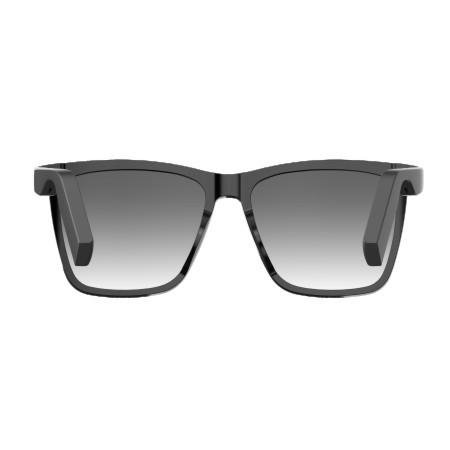
Specialized applications like driving safety glasses require precise integration of optical technologies with communication features. Full ownership OEM enables brands to develop proprietary algorithms for wind noise reduction, integrate vehicle connectivity protocols, and create lens replacement programs that generic products cannot support. These capabilities translate directly to customer value and sustainable competitive advantages.
Quality Assurance Under Full Ownership Models
Complete design ownership intensifies your quality assurance responsibilities but also provides greater control over quality outcomes. Your documentation packages include complete specifications that enable rigorous incoming inspection, in-process monitoring, and finished product validation. Quality management systems can reference specific design parameters rather than relying on generic manufacturer standards.
Establish clear quality agreements with manufacturing partners that define responsibilities, acceptance criteria, and escalation procedures. The transparency inherent in full ownership relationships supports collaborative quality improvement while maintaining clear accountability boundaries.
Long-Term Strategic Value
Full OEM ownership creates compounding strategic value that extends well beyond individual product generations. Design capabilities developed through full ownership partnerships transfer to future products, building organizational expertise that competitors cannot easily replicate. The documentation, processes, and supplier relationships established through ownership models create infrastructure supporting sustained innovation.
Brands achieving design ownership maturity report faster development cycles, lower per-product development costs, and greater market responsiveness compared to dependency-based models. These operational advantages translate directly to competitive positioning and profitability.
Partner Selection Criteria for B2B Buyers
Evaluate potential manufacturing partners across multiple dimensions beyond production capabilities. Seek partners demonstrating documented experience with full ownership transitions, including complete documentation delivery and smooth IP transfer processes. Assess their willingness to provide references from previous full ownership partnerships and verify the comprehensiveness of their standard transfer packages.
Communication capabilities and engineering support structures indicate how effectively partners enable your design teams to leverage ownership benefits. Partners offering design consultation, manufacturing engineering support, and proactive problem resolution add value beyond basic production services.
Future-Proofing Through Design Ownership
The smart glasses industry continues evolving toward increasingly integrated experiences combining audio, visual, and computational capabilities. Full OEM ownership positions your brand to adapt seamlessly as these technologies converge. Your design teams access complete product architectures enabling exploration of new feature combinations, integration approaches, and user experience innovations.
Brands maintaining design ownership avoid obsolescence risks inherent in proprietary platforms that may not evolve alongside market requirements. This future-proofing consideration increasingly influences OEM versus ODM decisions as the technology landscape accelerates.
Take the Next Step Toward Design Independence
B2B buyers seeking genuine competitive advantages in the smart glasses market should prioritize partnerships offering complete design ownership. The strategic, operational, and financial benefits compound over time, creating sustainable differentiation that proprietary platforms cannot match. Evaluate your current manufacturing arrangements against full ownership models and explore how ownership transfer accelerates your brand's market position.
Connect with experienced smart glasses manufacturers who understand full ownership transitions and can guide your organization through documentation, capability building, and production launch processes. Your design independence journey begins with partnership selection, and the right manufacturing ally transforms ownership aspiration into operational reality.
| Factor | OEM Full Ownership | Traditional ODM |
|---|---|---|
| Design Control | Complete and exclusive | Limited customization |
| IP Rights | Fully transferred to buyer | Retained by manufacturer |
| Time to Market | Longer initial development | Faster deployment |
| Supply Chain Flexibility | Multi-supplier capable | Single-source dependent |
| Long-term Costs | Lower over product lifecycle | Ongoing licensing fees |
