
Posted At: Apr 27, 2026 - 2,966 Views

When sourcing smart glasses for your brand or distribution business, understanding the relationship between production volume and manufacturing economics can mean the difference between a profitable product line and a costly miscalculation. Economies of scale represent one of the most powerful levers available to B2B procurement professionals, yet many companies fail to leverage this concept effectively when establishing partnerships with manufacturers in China.
The smart glasses market continues its upward trajectory, with industry analysts projecting significant growth through the coming decade. As consumer demand for wearable technology accelerates, brands and distributors face mounting pressure to deliver competitive pricing without compromising on quality. The solution lies in understanding how production volume influences every aspect of your manufacturing economics.
How Production Volume Transforms Manufacturing Economics
Economies of scale operate on a straightforward principle: as production volume increases, the cost per unit typically decreases. This phenomenon occurs because fixed costs—such as tooling, equipment setup, and facility overhead—are distributed across a larger number of units. For smart glasses manufacturers, these fixed costs can represent substantial investments, making volume optimization a critical consideration for any serious buyer.
Consider the initial investment required to produce a single pair of smart glasses. The manufacturing process involves precision components including micro displays, optical systems, battery technology, wireless connectivity modules, and sophisticated firmware integration. Each of these elements requires specialized equipment and expertise to assemble correctly. When production runs are small, these setup costs dominate the per-unit price, resulting in higher costs that ultimately impact your market competitiveness.
As order quantities increase, manufacturers can implement more efficient production workflows. Assembly lines become specialized for specific product variants, reducing changeover time and minimizing errors. Workers develop expertise through repetition, increasing throughput while maintaining quality standards. These operational improvements translate directly into lower per-unit costs that you can pass on to your customers or reinvest in product development.
The Mathematics Behind Volume-Based Pricing
Smart glasses OEM pricing structures typically follow a tiered model that rewards larger orders with progressively lower unit costs. Understanding these tiers helps procurement professionals make informed decisions about order quantities and inventory management.
A typical volume pricing structure might look like this:
| Order Quantity | Typical Per-Unit Cost Index | Setup Fee Impact |
|---|---|---|
| 100-500 units | 100% (baseline) | Significant |
| 500-2,000 units | 75-85% | Moderate |
| 2,000-5,000 units | 60-70% | Minimal |
| 5,000-10,000 units | 50-60% | Negligible |
| 10,000+ units | 40-50% | Absorbed by volume |
These percentages demonstrate the substantial savings available to buyers willing to commit to larger initial orders. However, the decision requires careful analysis of your sales velocity, storage capacity, and capital availability. A miscalculation here can tie up working capital in excess inventory, negating the cost benefits achieved through volume pricing.
Smart glasses manufacturers offering smart polarized sunglasses often provide volume discount schedules that align with these economics. By understanding where your order quantity falls within their pricing tiers, you can negotiate more effectively and optimize your total cost of ownership.
Quality Consistency Across High-Volume Production
A common concern among B2B buyers considering high-volume orders involves maintaining consistent quality across large production runs. This concern is legitimate but often overstated when working with established manufacturers who have refined their processes specifically for volume production.
Reputable smart glasses factories implement comprehensive quality management systems that scale with production volume. Statistical process control methods monitor key quality indicators in real-time, allowing immediate correction of any deviations from specifications. Component suppliers are pre-qualified and held to stringent tolerance requirements, ensuring that each unit meets the same standards regardless of when it was produced in the run.
Modern manufacturing facilities also invest in automated testing equipment that performs comprehensive functional checks on every unit produced. This automated approach eliminates the inconsistency inherent in manual inspection while providing detailed traceability data for each product. When you receive your order, you can be confident that quality standards have been maintained throughout the entire production volume.
Supply Chain Optimization Through Volume Commitments
When you commit to higher production volumes, manufacturers can optimize their supply chain operations in ways that benefit both parties. Component suppliers offer better pricing and priority allocation to manufacturers who provide consistent, high-volume demand. These savings cascade through the supply chain, ultimately benefiting your procurement costs.
Long-term volume commitments also enable manufacturers to invest in specialized equipment and tooling that would be uneconomical for lower-volume production. Consider the molds required for injection-molded components, the fixtures needed for precision assembly, or the testing equipment necessary for thorough product validation. These investments amortize more favorably across larger production volumes, allowing manufacturers to improve efficiency without increasing per-unit costs.
The predictability that comes with volume commitments also enables better inventory management. Manufacturers can plan component procurement more accurately, reducing the risk of shortages or delays that might impact your delivery schedule. For your business, this translates to more reliable lead times and the ability to meet market demand without costly expediting fees.
Strategic Considerations for Order Planning
While the economics clearly favor higher production volumes, B2B buyers must balance cost optimization against business realities. Several strategic factors should inform your volume decisions.
First, analyze your sales forecast carefully. Overestimating demand can result in excess inventory that ties up capital and may become obsolete as technology evolves. Underestimating demand means missed sales opportunities and potentially higher costs for subsequent orders placed at less favorable pricing tiers.
Second, consider your storage and logistics capabilities. Larger orders require adequate warehouse space and robust inventory management systems. Factor these operational costs into your analysis when comparing volume pricing against the convenience of smaller, more frequent orders.
Third, evaluate your product lifecycle stage. New product launches may warrant more conservative initial orders to gauge market response. Established products with proven demand patterns can support larger volume commitments with greater confidence.
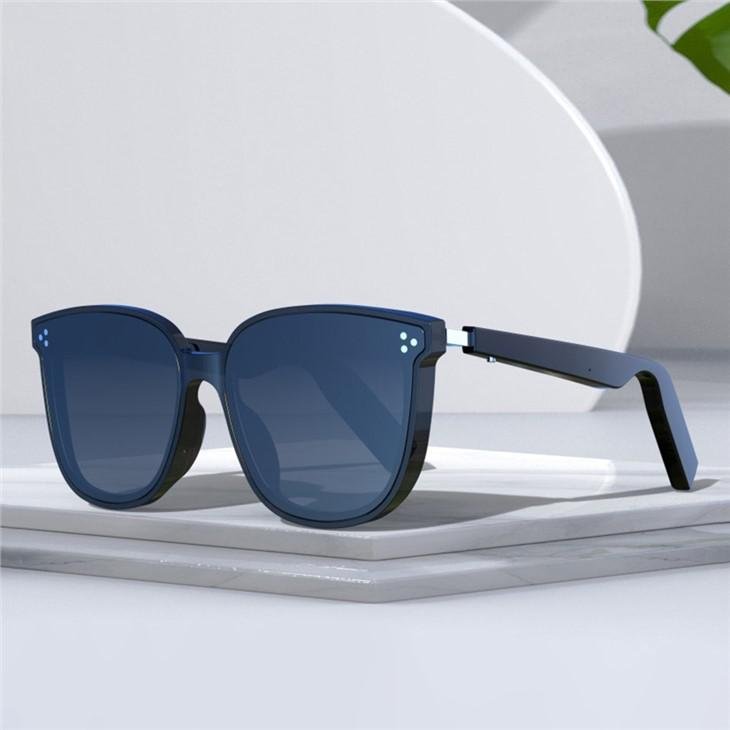
Partner Selection and Volume Capability
Not all smart glasses manufacturers can deliver the volume levels necessary to achieve optimal economies of scale. When evaluating potential partners, assess their production capacity honestly. A manufacturer claiming to produce 50,000 units monthly may be able to fulfill your order, but could they do so while maintaining the quality standards your brand requires?
Look for manufacturers with proven track records in high-volume production. Visit facilities when possible or request detailed documentation of their production capabilities. Understand their component sourcing strategies, quality control procedures, and workforce stability. These factors directly impact their ability to deliver consistent results as order volumes increase.
The best OEM/ODM partnerships involve open communication about volume expectations from the outset. Reputable manufacturers will help you understand the minimum order quantities necessary to achieve competitive pricing while ensuring quality consistency. They should also demonstrate flexibility in accommodating growth trajectories, allowing you to scale volumes as your business expands.
Regional Manufacturing Advantages in China
China's dominance in smart glasses manufacturing stems from more than just low labor costs. The ecosystem that has developed around electronics manufacturing in regions like Shenzhen provides comprehensive infrastructure that supports high-volume production efficiently.
Component suppliers cluster near assembly facilities, minimizing logistics costs and lead times. Specialized tooling shops, testing equipment providers, and logistics companies form a complete support network. This ecosystem enables manufacturers to optimize operations in ways that simply aren't possible in regions lacking this infrastructure density.
Chinese manufacturers have also accumulated substantial expertise in smart glasses production through years of serving global brands. This knowledge encompasses not just assembly techniques but also regulatory compliance, export documentation, and international quality standards. When you partner with an experienced manufacturer, you benefit from this accumulated expertise without bearing the cost of developing it internally.
Balancing Cost and Flexibility
While volume optimization offers clear economic benefits, B2B buyers must also consider the value of operational flexibility. Larger orders tied to specific product configurations may limit your ability to respond to market changes or introduce product variations quickly.
Some buyers address this challenge through a hybrid approach. Establish core volume commitments with your manufacturer for proven product lines while maintaining capacity for smaller, more flexible orders of new variants or limited editions. This strategy captures economies of scale where demand is predictable while preserving agility where it matters most.
Manufacturers increasingly offer programs designed to balance these competing priorities. Forecast-based ordering allows you to adjust quantities within defined ranges without penalty. Phased delivery schedules let you manage inventory while spreading the financial impact of large orders. These flexible arrangements require manufacturer buy-in, so establish these terms during partnership negotiations rather than discovering limitations after committing to volume orders.
Making Your First Volume Order
If you're new to high-volume smart glasses procurement, approach your first significant order methodically. Start with thorough product specification review, ensuring that every detail is documented clearly before production begins. Misunderstandings at this stage become exponentially more expensive as volume increases.
Request production samples before committing to full volume. These samples should undergo rigorous evaluation against your specifications. Any issues identified at this stage are far less costly to address than problems discovered after producing thousands of units.
Establish clear quality metrics and acceptance criteria in writing. Define sampling procedures, defect classifications, and resolution processes. Having these parameters documented protects both parties and ensures alignment on quality expectations from the beginning.
Smart glasses featuring directional audio smart glasses technology represent an excellent entry point for brands exploring volume production. These products require sophisticated integration of multiple subsystems, testing the manufacturer's capabilities while offering strong market appeal.
Long-Term Partnership Value
The most successful B2B relationships in smart glasses manufacturing extend beyond individual transactions. When manufacturers understand your business trajectory, they can proactively suggest improvements, anticipate component availability issues, and align their capacity planning with your growth objectives.
This partnership value compounds over time. Early identification of potential issues, collaborative problem-solving, and continuous improvement initiatives all contribute to better outcomes than transactional ordering relationships. Manufacturers invest more in partners who demonstrate commitment through volume, and these investments benefit your business in countless ways throughout the partnership.
Consider establishing multi-year volume commitments that provide pricing stability while allowing for annual renegotiation based on actual volumes and market conditions. These arrangements signal your commitment to manufacturers while preserving some flexibility as circumstances evolve.
Start Your Volume Optimization Journey
The economics of smart glasses manufacturing reward buyers who understand and leverage production volume effectively. By committing to optimized order quantities, you can achieve cost structures that enhance your competitive position while maintaining the quality standards your customers expect.
Our team helps B2B buyers navigate these decisions daily, matching production requirements with manufacturing capabilities to achieve optimal outcomes. Whether you're launching your first smart glasses product or expanding an established line, we have the expertise and capacity to support your growth objectives.
Request a consultation to discuss your production volume requirements and discover how economies of scale can transform your smart glasses business. We'll analyze your needs, recommend optimal volume strategies, and connect you with manufacturing partners equipped to deliver consistent quality at scale.
