
Posted At: Nov 03, 2026 - 125 Views

When sourcing smart glasses for your brand or distribution business, wireless connectivity determines how your products perform in the real world. Every specification sheet mentions Bluetooth and WiFi, but understanding what these terms mean for your product line can make the difference between a best-seller and a returns nightmare. This guide breaks down the connectivity technologies that power modern smart eyewear and what they mean for your manufacturing decisions.
Why Connectivity Matters in Smart Eyewear
Smart glasses are only as smart as their ability to communicate with other devices. Whether your customers are using them for hands-free calls while cycling, listening to music during workouts, or receiving navigation prompts while traveling, the wireless connection must be reliable, energy-efficient, and compatible with the devices your market uses daily.
For OEM and ODM manufacturing partnerships, connectivity specifications directly impact your bill of materials costs, battery life decisions, and regulatory compliance. A smart glasses manufacturer worth their salt will walk you through these trade-offs, but you need enough foundational knowledge to ask the right questions.
Bluetooth Technology in Smart Glasses
Bluetooth remains the dominant wireless protocol in smart eyewear, and for good reason. The technology consumes minimal power while providing sufficient bandwidth for audio streaming, call handling, and basic data synchronization.
How Bluetooth Powers Smart Audio Eyewear
Most consumer smart glasses on the market today rely entirely on Bluetooth for their wireless functionality. The protocol handles audio streaming from smartphones, tablet communication for navigation apps, and connection to voice assistants like Siri and Google Assistant. When you look at best Bluetooth smart glasses 2024 models, you'll notice this technology forms the backbone of their wireless systems.
The Bluetooth Special Interest Group reports that over 4.6 billion Bluetooth devices shipped in 2023 alone, making it the most widely adopted wireless standard globally. This ubiquity means your smart glasses customers expect seamless pairing with their existing devices without the frustration of compatibility issues.
Bluetooth Versions and Their Impact
Modern smart glasses typically feature Bluetooth 5.0 or higher, with Bluetooth 5.3 becoming the new standard for 2024 releases. The evolution matters for several reasons:
- Bluetooth 5.0 introduced four-times the range and twice the speed of its predecessor, enabling stable connections even when phones sit in backpacks or across rooms
- Bluetooth 5.2 brought LE Audio and the LC3 codec, improving audio quality at lower bitrates while extending battery life
- Bluetooth 5.3 refined connection stability and reduced latency, critical for real-time applications like navigation prompts and call audio
When specifying your OEM order, confirm that your manufacturer uses chipsets from reputable suppliers like Qualcomm, MediaTek, or Realtek. Inconsistent Bluetooth implementations lead to pairing failures, audio dropout, and the negative reviews that hurt brand reputation.
Audio Profiles and Codec Support
Smart audio glasses use specific Bluetooth profiles to function properly across different use cases:
- HFP (Hands-Free Profile) handles call functionality with microphone integration
- A2DP (Advanced Audio Distribution Profile) streams high-quality stereo audio to the glasses
- AVRCP (Audio/Video Remote Control Profile) enables playback control without touching the phone
Codec support affects the listening experience significantly. SBC provides universal compatibility, AAC offers improved quality for Apple devices, and aptX/AptX LL deliver low-latency, high-fidelity audio preferred by Android users and audiophiles. Your manufacturing partner should help you select codec support based on your target market's dominant device ecosystem.
WiFi Connectivity in Smart Glasses
While Bluetooth handles everyday device interactions, WiFi serves different purposes in smart eyewear. The technology appears less frequently in standard smart glasses but becomes essential for AR (augmented reality) eyewear and devices requiring high-bandwidth data transfer.
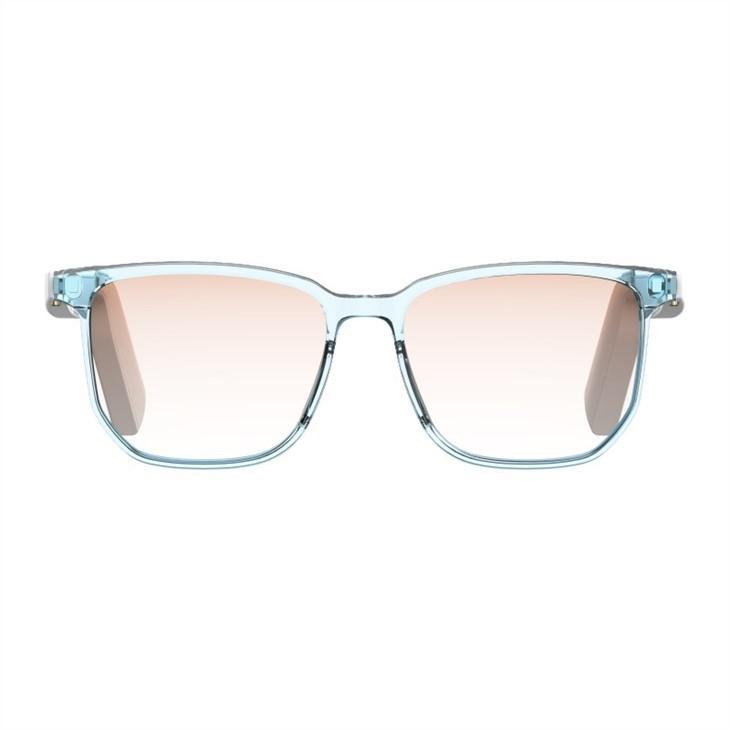
Consider smart Bluetooth audio glasses for your product line if your customers need reliable everyday connectivity. These models typically rely solely on Bluetooth, keeping costs down and battery life optimized for all-day use.
When Smart Glasses Need WiFi
WiFi integration becomes relevant in several scenarios:
- AR glasses with streaming capabilities requiring real-time video passthrough or cloud processing
- Enterprise smart glasses needing direct cloud database access for inventory or maintenance applications
- OTA (Over-The-Air) updates that download firmware updates more quickly than Bluetooth permits
- Direct internet access when smartphones aren't available nearby
WiFi Standards and Smart Eyewear
Modern smart glasses with WiFi capability typically support 802.11ac (WiFi 5) or 802.11ax (WiFi 6). The latter offers significant advantages in congested environments where many devices compete for bandwidth, making it preferable for enterprise deployments in warehouses or retail environments.
Adding WiFi functionality increases BOM costs, requires additional antenna design work, and impacts battery life more severely than Bluetooth. For most consumer smart glasses use cases, Bluetooth alone provides the necessary functionality without these trade-offs.
Comparing Bluetooth and WiFi for Smart Glasses
Understanding the practical differences helps you make informed decisions when specifying your OEM orders. Here's a comparison framework:
| Feature | Bluetooth | WiFi |
|---|---|---|
| Power Consumption | Low (milliwatts) | Higher (hundreds of milliwatts) |
| Typical Range | 10-100 meters | 30-100+ meters |
| Data Rate | Up to 2 Mbps (BT 5.0+) | Up to 9.6 Gbps (WiFi 6) |
| Primary Use Case | Audio, calls, device sync | High-bandwidth streaming, cloud access |
| BOM Impact | Minimal | Significant |
| Battery Impact | Minimal | Considerable |
Dual-Band and Multi-Device Connectivity
Premium smart glasses increasingly support simultaneous connections to multiple devices. A sales professional wearing smart glasses might connect to a laptop for CRM notifications while maintaining phone connectivity for calls. This multi-point capability requires sophisticated Bluetooth stack implementation and careful firmware development.
When evaluating manufacturing partners, ask about their experience with multi-point connectivity implementations. Poorly implemented multi-device support creates frustrating user experiences where audio doesn't switch properly or calls fail to route correctly.
Manufacturing Considerations for B2B Buyers
Selecting the right connectivity implementation affects your entire product lifecycle, from initial costs through customer satisfaction and returns rates.
Antenna Design and RF Performance
The connectivity chips are only as good as their antenna implementation. Smart glasses present unique RF design challenges because the frame must contain the antenna while maintaining comfort and aesthetics. Metal frames require special design considerations to avoid signal blocking.
Your manufacturer should conduct proper RF testing including:
- OTA (Over-The-Air) performance testing to ensure radiated power meets regulatory requirements
- Sensitivity testing across frequency bands used in your target markets
- Co-existence testing to verify Bluetooth and WiFi don't interfere when both are active
Regulatory Compliance Across Markets
Wireless devices face regulatory requirements in every market where they sell. The FCC in North America, CE marking in Europe, and various national type approval requirements demand that your smart glasses meet specific RF performance criteria.
Working with an experienced smart glasses manufacturer who understands these requirements prevents costly redesigns and market entry delays. They should provide pre-compliance testing and guide you through the certification process for your target regions.
Future-Proofing Your Connectivity Strategy
Bluetooth LE Audio represents the next significant evolution in Bluetooth technology, bringing broadcast audio capabilities, improved power efficiency, and better support for hearing aid compatibility. WiFi 7 is also emerging, promising even higher throughput and lower latency.
When developing your product roadmap, discuss with your manufacturing partner how upcoming chip generations might fit into your product line. Building modular designs that accommodate new chipsets without complete redesigns protects your investment and speeds time-to-market for improved models.
Making Connectivity Decisions for Your Smart Glasses Line
The right connectivity choice depends on your target use case, price point, and customer expectations. For most audio-focused smart glasses targeting fitness enthusiasts, commuters, or casual users, Bluetooth 5.3 with comprehensive codec support provides the best balance of performance, power efficiency, and cost.
If you're targeting enterprise customers or planning AR-enabled products, evaluate manufacturers with proven WiFi implementation experience and the RF engineering capabilities to handle dual-protocol devices.
Regardless of your specific requirements, the manufacturing partner you choose must demonstrate deep expertise in wireless implementation, not just assembly. Connectivity issues are among the most common sources of product returns and brand damage in the smart wearables category.
Partner with Experts in Smart Glasses Manufacturing
Understanding connectivity technologies empowers you to have more productive conversations with potential manufacturing partners and make informed decisions about your product specifications. Whether you need Bluetooth-only audio glasses for the sports market or advanced dual-connectivity devices for enterprise applications, the foundation remains the same: reliable wireless performance that delights your customers.
Our team specializes in helping B2B buyers navigate these technical decisions while maintaining focus on commercial outcomes. From initial concept through mass production, we bring manufacturing expertise that ensures your smart glasses perform reliably in the hands of your customers.
Ready to discuss your smart glasses connectivity requirements? Reach out to our engineering team to review your specifications and explore how we can support your product development journey.
