
Posted At: May 20, 2026 - 2,533 Views

When evaluating smart glasses for your product line, power consumption represents one of the most critical technical considerations that directly impacts user experience, product marketability, and brand reputation. As a B2B buyer seeking OEM or ODM manufacturing partnerships in China, understanding how smart glasses manufacturers approach battery optimization can mean the difference between a successful product launch and a costly failure.
Modern smart glasses must balance computational power, connectivity capabilities, sensor arrays, and display technology—all while maintaining a form factor that users find comfortable and fashionable. This balancing act places enormous pressure on battery systems, making power efficiency a cornerstone of any serious smart glasses development program.
Understanding Power Consumption in Smart Glasses
Smart glasses differ fundamentally from smartphones when it comes to power constraints. While smartphones can accommodate larger batteries due to their handheld form factor, smart glasses must remain lightweight and comfortable for extended wear. This creates a unique engineering challenge: delivering meaningful functionality within strict power and weight limitations.
At Smart Glasses Factory, we engineer our products with power efficiency as a primary design consideration. Our Best Bluetooth Smart Glasses 2024 demonstrate how careful component selection and software optimization can deliver impressive battery performance without sacrificing functionality.
Key Components Driving Power Consumption
Several primary components determine overall power consumption in smart glasses:
- Wireless Communication Modules: Bluetooth and Wi-Fi chipsets consume significant power during active transmission and pairing. Modern Bluetooth 5.0 and later versions offer improved power efficiency compared to older standards.
- Audio Processing: Built-in speakers, microphones, and audio codecs require continuous power, especially during calls or music playback. Our Open Music Hands-free Call Smart Glasses utilize optimized audio drivers that maximize sound quality while minimizing power draw.
- Display Technology: AR-enabled glasses with heads-up displays consume substantially more power than audio-only devices. Micro-OLED and waveguide displays require careful power management to achieve reasonable battery life.
- Sensor Arrays: Accelerometers, gyroscopes, GPS modules, and environmental sensors all contribute to total power consumption. Smart sensor fusion algorithms can reduce overall power draw by intelligently activating only necessary sensors.
- Processing Units: Application processors and microcontrollers execute firmware and applications. Low-power chipsets designed specifically for wearables offer significant advantages over repurposed smartphone components.
Battery Technologies and Capacity Considerations
The choice of battery technology profoundly affects both power capacity and physical design. Lithium-polymer batteries remain the dominant choice for smart glasses due to their flexible form factor and reasonable energy density. However, emerging solid-state battery technologies promise improvements in both safety and energy density for future generations.
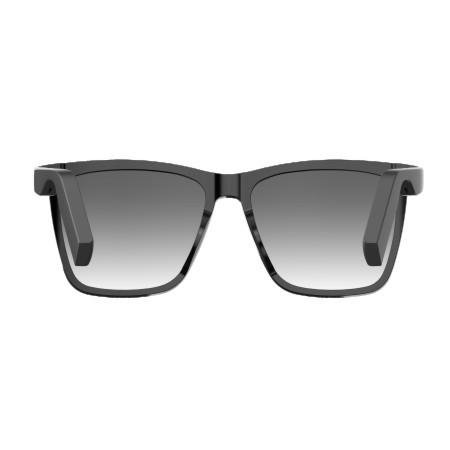
Typical smart glasses batteries range from 120mAh to 500mAh depending on feature set and target use case. Audio-focused glasses like our Riding Music Sunglasses can achieve 8-12 hours of continuous playback with batteries in the 200-300mAh range, while feature-rich AR glasses may require larger capacity or shorter runtime expectations.
Optimization Strategies for Extended Battery Life
Professional smart glasses manufacturers employ multiple strategies to maximize battery performance:
Hardware-Level Optimization
Component selection plays a crucial role in power efficiency. Low-power Bluetooth chipsets, efficient audio amplifiers, and optimized display drivers all contribute to reduced baseline consumption. The Bluetooth Call Driving Glasses in our lineup demonstrate how careful hardware selection enables all-day battery life without compromising call quality or connectivity.
Software Power Management
Intelligent software can dramatically reduce power consumption through several mechanisms:
- Adaptive Brightness Control: Automatically adjusting display brightness based on ambient light conditions saves power during indoor use while maintaining visibility outdoors.
- Smart Sleep Modes: Aggressive power-saving states when glasses are stationary or removed, with instant wake-on-motion capabilities, minimize wasted power.
- Connection Optimization: Efficient pairing protocols and intelligent reconnection algorithms reduce the power required for wireless communication.
- Audio Codec Efficiency: Using optimized audio codecs that require less processing power while maintaining sound quality.
Thermal Considerations
Power efficiency and thermal management are closely linked. Excessive power consumption generates heat, which can degrade battery performance and create user discomfort. Our manufacturing processes account for thermal dynamics, ensuring that our products remain comfortable for extended wear while maintaining optimal battery performance throughout the product lifecycle.
What B2B Buyers Should Evaluate
When selecting a smart glasses manufacturing partner, B2B buyers should assess several power-related factors:
| Evaluation Criteria | What to Look For | Why It Matters |
|---|---|---|
| Battery Capacity | Appropriate mAh for intended use case | Ensures runtime meets market expectations |
| Power Efficiency Certifications | Energy star ratings, low-power mode compliance | Indicates manufacturing quality standards |
| Real-World Testing Data | Documented battery life under various conditions | Marketing claims often differ from reality |
| Charging Technology | Fast charging, wireless charging options | Impacts user convenience and product value |
| Thermal Performance | Operating temperature ranges, heat dissipation | Affects safety, comfort, and battery longevity |
At Smart Glasses Factory, we provide comprehensive battery performance documentation for all our products, including the Smart Bluetooth Sunglasses Wireless Headset series, allowing B2B partners to make informed decisions based on verified specifications rather than optimistic projections.
Balancing Features Against Power Demands
Every feature added to smart glasses comes with power implications. Product managers must make difficult trade-offs between functionality and battery life. For example:
- Always-on voice assistants provide convenience but require continuous power draw
- High-resolution displays enable richer experiences but significantly impact battery life
- Multiple simultaneous connections (Bluetooth, Wi-Fi, GPS) multiply power consumption
- Advanced noise cancellation requires additional processing power and microphone arrays
Understanding these trade-offs allows B2B buyers to prioritize features that deliver maximum perceived value while maintaining acceptable battery performance. Our engineering team works closely with partners to find the optimal balance for specific market requirements and price points.
Future Trends in Power Optimization
The smart glasses industry continues evolving with several emerging technologies poised to address power consumption challenges:
Energy Harvesting: Solar charging integrated into frame components, kinetic energy recovery from movement, and thermal energy harvesting offer possibilities for extending runtime without increasing battery size.
Advanced Battery Technologies: Solid-state batteries promise higher energy density with improved safety characteristics. Graphene-based supercapacitors may enable rapid charging with extended cycle life.
AI-Driven Power Management: Machine learning algorithms can optimize power consumption by learning user patterns and automatically adjusting device behavior to maximize efficiency during typical usage scenarios.
Edge Computing Efficiency: As processors become more specialized for AI workloads, they can perform complex tasks with dramatically reduced power consumption compared to general-purpose chips.
Partner With Manufacturers Who Prioritize Power Efficiency
Selecting the right OEM partner means finding a manufacturer that treats power optimization as a core competency rather than an afterthought. At Smart Glasses Factory, our engineering teams conduct extensive power analysis during the design phase, using simulation tools and real-world testing to validate battery performance before production begins.
Whether you need Anti-blue Light Smart Call Glasses for professional use, Bluetooth Smart Audio Sunglasses for fitness applications, or specialized eyewear for industrial environments, we bring the same rigorous approach to power optimization across our entire product range.
Ready to discuss your smart glasses project with a manufacturing partner who understands power consumption challenges? Contact our engineering team to review your requirements and explore how we can deliver power-optimized solutions that meet your market objectives.
