
Posted At: Jul 15, 2026 - 36 Views

As smart glasses evolve from novelty gadgets into essential professional tools, the interface between human intention and device action has become a critical differentiator. Touch controls and gesture-based interaction represent the bridge that transforms sophisticated hardware into intuitive wearable experiences. For brands, distributors, and manufacturers seeking to capitalize on this growing market, understanding the intricacies of gesture interface technology is no longer optional—it's fundamental to product success.
Understanding Touch Control Technology in Wearables
Touch controls in smart glasses differ substantially from those in smartphones or tablets. The confined temple area, limited surface space, and the need for non-intrusive operation demand innovative approaches to sensor placement and interaction design. Modern smart glasses typically employ multiple sensing modalities working in concert to create seamless user experiences.
Capacitive touch sensing remains the dominant technology for smart glasses interfaces. These sensors detect the electrical conductivity of the human body, registering touch events when a finger approaches or contacts the sensor surface. The technology offers several advantages: minimal power consumption, fast response times, and the ability to detect multiple simultaneous touch points.
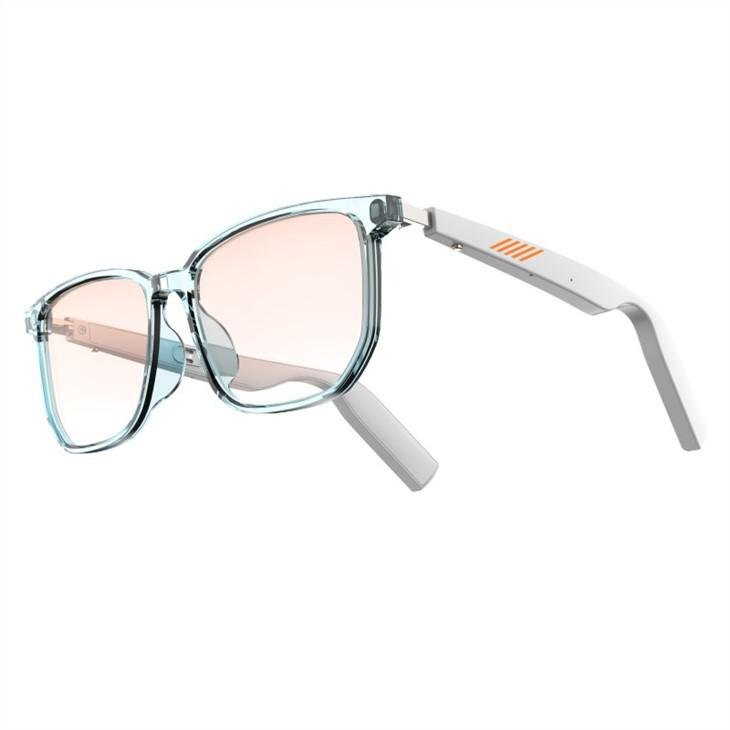
Our Smart Bluetooth Audio Glasses demonstrate how advanced capacitive touch controls can be elegantly integrated into stylish frame designs without compromising aesthetics or functionality. The touch-sensitive areas on the temples respond to taps, swipes, and long presses, enabling users to control music playback, answer calls, and activate voice assistants without reaching for their phones.
Types of Touch Sensors in Smart Glasses Manufacturing
Manufacturers have developed several touch sensor technologies specifically optimized for wearable applications. Each approach offers distinct advantages depending on the intended use case, durability requirements, and cost parameters.
Projected Capacitive Touch Sensors
Projected capacitive technology (PCT or PCAP) uses an electrostatic field projected above the sensor surface. When a conductive object like a human finger enters this field, the system detects the resulting change in capacitance. This technology provides excellent sensitivity and can detect touch through thin non-conductive materials, making it ideal for integration beneath protective coatings or within multi-layer assemblies.
Resistive Touch Sensors
While less common in current smart glasses designs, resistive touch technology uses pressure-sensitive layers that register contact through physical deformation. These sensors offer advantages in certain industrial or extreme environment applications where gloved operation might be required. However, the mechanical complexity and reduced optical clarity have limited their adoption in consumer-focused smart eyewear.
Optical Touch Sensors
Emerging optical touch solutions use infrared LEDs and photodetectors to create invisible light grids across the touch surface. When a finger interrupts the light beams, the system calculates the touch position through triangulation. This approach enables touch detection across larger surface areas and can even work through thick glass or plastic materials, opening possibilities for innovative frame designs.
Surface Acoustic Wave Technology
Surface acoustic wave (SAW) systems use ultrasonic waves traveling across the touch surface. Any interference caused by a finger contact is detected and translated into touch coordinates. While historically used in industrial touchscreens, miniaturized SAW technology is finding applications in premium smart glasses where precision and multi-touch capability are paramount.
Gesture Recognition: Beyond Simple Touch
The evolution of smart glasses interfaces has moved well beyond basic tap and swipe functionality. Advanced gesture recognition systems now enable sophisticated interactions that feel natural and intuitive, dramatically improving user adoption rates.
Air gestures represent one of the most exciting developments in smart glasses interaction design. Using proximity sensors, infrared cameras, or radar-based detection, these systems allow users to control their devices through hand movements in the space near the glasses. A simple wave in front of the lens can scroll through content, accept notifications, or navigate menus without physically touching the device.
Head Movement Gestures
Integration of inertial measurement units (IMUs) with sophisticated algorithms enables smart glasses to respond to head movements. Nodding or shaking the head can confirm or reject actions, while tilts and turns provide additional input channels. This technology proves particularly valuable in hands-free working environments where manual interaction is impractical or unsafe.
Haptic Feedback Integration
Effective touch controls require confirmation that input has been received and processed. Haptic feedback systems embedded within smart glasses provide subtle vibrations or tactile sensations that acknowledge touch events. Piezoelectric actuators and eccentric rotating mass (ERM) motors deliver precise haptic responses while consuming minimal power and occupying tiny form factors.
Materials and Manufacturing Considerations
The selection of materials for touch sensor manufacturing directly impacts durability, optical clarity, electrical performance, and ultimately, the user experience. Our Audio Gaming Glasses showcase premium materials engineered to withstand daily use while maintaining responsive touch performance.
Conductive Materials
Traditional indium tin oxide (ITO) coatings remain common in touch sensor production due to their excellent transparency and conductivity. However, ITO's brittleness and vulnerability to bending have prompted the industry to explore alternative materials. Silver nanowires, copper mesh, and graphene-based conductors offer superior flexibility while maintaining electrical performance. These materials enable curved touch surfaces that conform to the ergonomic requirements of eyewear.
Substrate Selection
The underlying substrate material must balance optical clarity, impact resistance, and thermal stability. Polyethylene terephthalate (PET) films provide cost-effective solutions for standard applications, while polycarbonate substrates offer enhanced durability for sports and industrial use cases. For premium products requiring superior optical performance, cyclo-olefin polymers deliver exceptional clarity with minimal chromatic aberration.
Protective Coatings
Touch sensor durability depends heavily on protective coating selection. Oleophobic coatings resist fingerprint smudges and simplify cleaning, while anti-scratch layers protect against daily wear. For outdoor-oriented smart glasses, UV-resistant coatings prevent degradation of both optical and electronic components, extending product lifespan in challenging environments.
Precision Calibration and Manufacturing Quality
The performance of touch controls in smart glasses depends critically on precise calibration during manufacturing. Each unit requires individual tuning to account for component tolerances, environmental factors, and the unique characteristics of the assembled product. Automated calibration systems use sophisticated algorithms to optimize sensitivity thresholds, response zones, and gesture recognition parameters.
Temperature variation poses particular challenges for touch sensor calibration. Capacitance values shift with temperature changes, potentially affecting sensitivity and accuracy. Advanced manufacturing processes incorporate temperature compensation algorithms and use materials with minimal thermal coefficients to ensure consistent performance across operating conditions ranging from freezing winters to scorching summers.
Water Resistance and Environmental Protection
Smart glasses increasingly target active lifestyles, requiring touch control systems that function reliably despite moisture exposure. Sweat during workouts, rain during commutes, and accidental splashes all demand robust water resistance without compromising touch sensitivity.
Hydrophobic nanocoatings applied to touch surfaces cause water droplets to bead and roll away rather than spreading across the sensor area. This not only maintains visibility but also prevents false touch registrations caused by water accumulation. For full waterproofing, manufacturers employ hermetic sealing techniques that isolate electronic components while preserving touch sensitivity through carefully designed capacitive coupling pathways.
Power Consumption Optimization
Touch controllers represent a continuous power drain even during standby periods, making energy efficiency critical for devices with limited battery capacity. Modern touch sensor integrated circuits incorporate sophisticated power management features including adaptive refresh rates, partial wake-up systems, and ultra-low power modes that maintain responsiveness while minimizing battery impact.
Wake-on-touch functionality enables the system to remain in deep sleep until actual contact is detected, dramatically reducing baseline power consumption. Advanced algorithms distinguish between intentional touches and environmental noise, preventing false activations that would drain battery unnecessarily.
Comparing Touch Control Technologies
| Technology | Sensitivity | Durability | Cost | Best Application |
|---|---|---|---|---|
| Projected Capacitive | Excellent | Very Good | Medium | Consumer Smart Glasses |
| Resistive | Good | Moderate | Low | Industrial/Durable |
| Optical | Excellent | Very Good | High | Premium Products |
| SAW | Excellent | Very Good | High | Specialized Applications |
Integration with Voice and AI Assistants
The most intuitive user experiences combine touch controls with complementary interaction modalities. Voice recognition provides hands-free operation for complex commands, while touch controls offer quick access to frequently used functions. This multi-modal approach reduces cognitive load and accommodates user preferences across different situations.
Integration with artificial intelligence enhances gesture recognition capabilities over time. Machine learning algorithms analyze touch patterns, pressure variations, and contextual information to predict user intentions and customize responses. A double-tap might mean different things depending on whether the user is currently listening to music or on a phone call, with the system learning these distinctions automatically.
Design Considerations for OEM Manufacturers
Brands entering the smart glasses market must carefully balance touch control performance against other product requirements. Industrial designers face constraints from form factor limitations, aesthetic considerations, and target price points that all influence sensor placement and interaction design.
The temple area of smart glasses provides limited real estate for touch interaction, typically offering 40-60mm of usable length. Designers must determine optimal touch zone placement based on ergonomic research, ensuring comfortable reach during various activities. Touch zones positioned too close to the hinge require uncomfortable arm positions, while zones near the ear may trigger accidental activations during normal conversation.
Testing and Quality Assurance
Comprehensive testing protocols verify touch control performance across all stages of manufacturing. Automated optical inspection checks sensor alignment and coating uniformity, while electrical testing validates capacitance values and response characteristics. Environmental chambers subject samples to temperature extremes, humidity cycles, and UV exposure to verify long-term reliability.
Functional testing simulates real-world usage through programmed sequences of touch events, verifying gesture recognition accuracy and response timing. Specialized jigs hold devices in precise orientations while robotic fingers execute thousands of touch cycles to validate mechanical durability and identify potential failure modes before mass production.
Future Directions in Gesture Interface Technology
The trajectory of touch control development points toward increasingly invisible interfaces that respond to natural movements without requiring deliberate touch. Eye tracking cameras combined with advanced algorithms may eventually replace traditional touch controls entirely, enabling gaze-based interaction that requires no physical contact whatsoever.
Ultrasonic gesture detection represents another frontier, using high-frequency sound waves to detect hand positions in three-dimensional space. This technology could enable touchless interaction through clothing or gloves, expanding smart glasses utility in healthcare, manufacturing, and cold-weather applications.
Contextual awareness will increasingly inform how touch controls behave. Sensors detecting ambient noise levels might increase haptic feedback intensity, while activity recognition could automatically adjust touch sensitivity based on whether the user is stationary, walking, or exercising. These adaptive systems promise to make smart glasses interaction feel increasingly effortless and intuitive.
Partnering for Success in Smart Glasses Manufacturing
Selecting the right manufacturing partner for touch-controlled smart glasses requires careful evaluation of technical capabilities, quality systems, and commitment to ongoing innovation. The complexity of gesture interface technology demands suppliers with deep expertise in materials science, electronics integration, and user experience design.
At Smart Glasses Factory, we specialize in turning ambitious smart glasses concepts into market-ready products. Our vertically integrated manufacturing capabilities span from touch sensor development through final assembly, ensuring tight quality control and rapid iteration throughout the development process. Whether you require standard capacitive touch implementations or cutting-edge gesture recognition systems, our engineering teams work alongside your brand to deliver products that exceed customer expectations.
Ready to discuss your next smart glasses project? Explore our portfolio of touch-enabled smart eyewear solutions and discover how we can help you bring innovative products to market faster, more efficiently, and with superior quality that builds lasting brand loyalty.
