
Posted At: Apr 24, 2026 - 1,732 Views

The wearable technology landscape has undergone a dramatic transformation as we navigate through 2026. AI smart glasses have emerged from being novelty gadgets into indispensable tools for both consumers and enterprise applications. Major technology companies, emerging startups, and traditional eyewear manufacturers are racing to capture market share in this rapidly evolving segment, creating unprecedented opportunities for businesses seeking smart glasses OEM manufacturing partnerships.
For B2B buyers, distributors, and brand managers, understanding the current state of AI smart glasses technology and the manufacturing ecosystem is crucial for making informed procurement decisions. The convergence of artificial intelligence, miniaturized hardware, and advanced optics has created a new generation of smart eyewear that delivers genuine utility rather than gimmicky features.
The Explosive Growth of AI Smart Glasses in 2026
Market analysts project the global smart glasses market will exceed $80 billion by the end of 2026, with AI-integrated devices accounting for nearly 60% of total sales. This explosive growth stems from several converging factors that have finally addressed long-standing barriers to adoption.
Consumer acceptance has skyrocketed as AI assistants embedded in smart glasses have become genuinely useful rather than experimental. Workers across industries—from logistics and healthcare to field service and retail—have embraced AI-powered eyewear for hands-free information access, real-time translation, and augmented reality overlays that enhance productivity.
The enterprise segment has been particularly aggressive in deployment. Warehouse operators, maintenance technicians, and healthcare professionals have integrated AI smart glasses into daily workflows, demonstrating clear ROI through improved efficiency and reduced errors. This enterprise validation has created a ripple effect, encouraging more businesses to explore smart glasses applications for their operations.
Key AI Features Driving Market Adoption
The latest generation of AI smart glasses distinguishes itself through sophisticated features that leverage artificial intelligence to deliver practical value. Understanding these capabilities is essential for B2B buyers evaluating potential products and manufacturing partners.
Advanced Voice AI and Natural Language Processing
Modern AI smart glasses feature highly refined voice assistants capable of understanding context, handling complex multi-step commands, and engaging in natural conversations. These systems go far beyond simple voice commands, enabling users to dictate messages, conduct web searches, and control smart home devices through conversational interactions.
The integration of large language models has particularly transformed how users interact with their smart glasses. Questions can be answered in context, meeting notes can be generated automatically, and language translation happens in real-time during conversations. This level of AI sophistication represents a quantum leap from earlier voice-controlled devices.
Computer Vision and Object Recognition
AI-powered computer vision capabilities have transformed smart glasses from simple display devices into intelligent visual assistants. Real-time object recognition enables users to identify products, read text in foreign languages, and access contextual information about their surroundings simply by looking at items.
For retail and hospitality businesses, this technology offers compelling applications. Staff can access product information, inventory details, and customer records by simply viewing relevant items or identification cards. The hands-free nature of this interaction eliminates the need to consult separate devices, streamlining customer service workflows significantly.
Health Monitoring and Biometric Analysis
The integration of health monitoring sensors into AI smart glasses has expanded their utility beyond communication and information access. Modern devices can track eye strain, monitor UV exposure, measure heart rate variability, and even detect early signs of fatigue through blink patterns and gaze behavior analysis.
These health features appeal particularly to professionals who spend extended hours in front of screens, outdoor workers exposed to harsh conditions, and elderly users who benefit from unobtrusive monitoring capabilities. The market for health-focused smart glasses continues to expand as awareness of digital eye strain and UV damage grows.
Manufacturing Landscape: China OEM/ODM Capabilities
China remains the dominant hub for smart glasses manufacturing, with clusters of specialized facilities in Shenzhen, Dongguan, and surrounding regions. The country's manufacturing ecosystem offers unique advantages for B2B buyers seeking reliable production partners for AI smart glasses.
Component Ecosystem and Supply Chain Integration
Chinese manufacturing hubs benefit from proximity to component suppliers specializing in smart glasses-specific parts. Display manufacturers, optical specialists, battery producers, and sensor companies have all established operations within practical distance of assembly facilities, enabling efficient supply chain management and faster production cycles.
This vertical integration allows manufacturers to offer competitive pricing without sacrificing quality. For B2B buyers, this translates into better margins and more flexible minimum order quantities than would be possible with manufacturing in higher-cost regions. The ability to source components locally also reduces lead times significantly, an important consideration for businesses responding to rapidly changing market conditions.
Technical Expertise and R&D Capabilities
Leading smart glasses OEM manufacturers in China have invested heavily in research and development, building teams of engineers specializing in optics, firmware development, AI integration, and industrial design. This technical depth enables manufacturers to offer comprehensive OEM/ODM services that go beyond simple assembly.
Experienced manufacturers can assist with product customization, advise on component selection based on cost-performance tradeoffs, and even suggest design modifications that improve manufacturing efficiency without compromising functionality. For B2B buyers who may be new to smart glasses development, this technical partnership can prove invaluable in bringing products to market successfully.
Quality Assurance and Certification Support
Reputable manufacturers maintain rigorous quality control processes aligned with international standards. Many facilities are certified to ISO 9001, ISO 13485 (for medical device applications), and other relevant quality management systems. This structured approach to quality assurance provides B2B buyers with confidence that products will meet consistent standards across production batches.
Additionally, established manufacturers offer support for regulatory certifications required in target markets. Whether pursuing CE marking for European sales, FCC certification for US market access, or industry-specific approvals for specialized applications, experienced OEM partners can navigate the certification process efficiently, reducing time-to-market for new products.
Evaluating AI Smart Glasses for Your Business
Selecting the right AI smart glasses for your business requires careful evaluation of multiple factors beyond simple pricing. Understanding these considerations helps B2B buyers make informed decisions that align with their specific use cases and commercial objectives.
| Feature Category | Entry-Level Considerations | Premium Considerations | Enterprise Considerations |
|---|---|---|---|
| Battery Life | 4-6 hours active use | 8-10 hours active use | 12+ hours with swappable batteries |
| AI Processing | Cloud-dependent basic commands | On-device basic AI, cloud for complex tasks | Full on-device AI processing capability |
| Display Quality | Monochrome waveguide | Full-color waveguide displays | High-resolution full-color with wide FOV |
| Durability | Consumer-grade construction | Reinforced frames, basic water resistance | Military-grade durability, IP67 rating |
| Customization | Limited frame options | Multiple frame styles available | Full OEM customization possible |
Product Applications Across Industries
AI smart glasses have found applications across diverse industries, each with unique requirements that influence product selection and customization priorities. Examining successful deployments in other sectors can inspire similar applications within your own business context.
Logistics and Warehouse Operations
Warehouse operators have deployed AI smart glasses extensively for order picking, inventory management, and quality control tasks. Workers equipped with smart eyewear receive visual guidance to picking locations, confirm task completion through voice commands, and access real-time inventory updates without handling separate devices. The productivity gains from this hands-free workflow have been substantial, with many operations reporting 20-30% improvements in picking efficiency.
Healthcare and Medical Applications
Medical professionals increasingly rely on AI smart glasses for documentation, remote consultation, and procedural guidance. Surgeons can review patient data and imaging during procedures without breaking sterile fields. Nurses can document care activities through voice while maintaining eye contact with patients. Remote specialists can view what front-line workers see and provide real-time guidance through audio overlays.
Field Service and Maintenance
Field technicians benefit significantly from AI smart glasses that provide access to technical documentation, expert consultation, and augmented reality overlays for complex procedures. When encountering unfamiliar equipment or challenging repairs, technicians can access step-by-step visual guides and connect with remote experts who see exactly what the technician sees.
Retail and Hospitality
Customer-facing businesses have discovered the value of AI smart glasses for enhancing service quality and operational efficiency. Staff can access product information, check inventory, process transactions, and request support without turning attention away from customers. The technology creates a more engaging service experience while equipping employees with comprehensive information access.
Strategic Considerations for B2B Procurement
B2B buyers approaching AI smart glasses procurement should develop comprehensive strategies that address immediate requirements while positioning for future needs. The rapidly evolving nature of AI technology means that procurement decisions should account for upgrade pathways and long-term partnership potential.
Volume Pricing and Production Capacity
Understanding manufacturer capabilities for scaling production is essential for businesses anticipating volume growth. Leading smart glasses manufacturers offer tiered pricing structures that reward larger orders while maintaining quality standards across production volumes. Establishing relationships with manufacturers capable of scaling alongside your business reduces the risk of supply constraints as demand grows.
Customization and Branding Opportunities
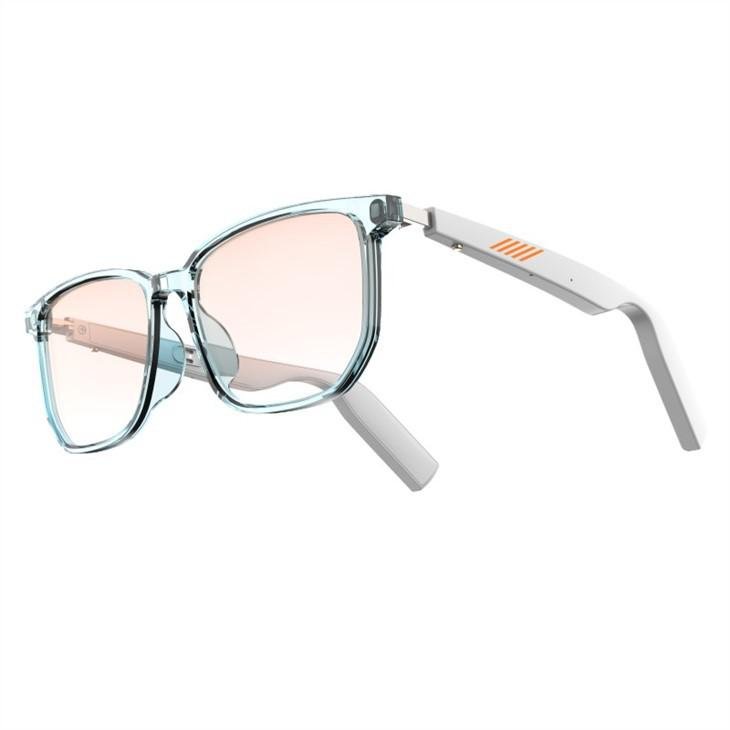
For businesses building consumer brands, customization capabilities become a critical differentiator. The best manufacturers offer comprehensive OEM/ODM services including custom frame design, logo integration, specialized packaging, and even UI customization to reflect brand identity. These services enable businesses to create distinctive products that stand apart from generic white-label alternatives.
After-Sales Support and Warranty Considerations
Product support infrastructure varies significantly among manufacturers and can substantially impact total cost of ownership. Reputable partners provide clear warranty terms, spare parts availability, and technical support channels that enable rapid resolution of issues. Establishing expectations around after-sales support before finalizing procurement agreements prevents costly surprises down the road.
The Technology Stack Behind Modern AI Smart Glasses
Understanding the underlying technology that powers AI smart glasses helps B2B buyers evaluate products and communicate requirements effectively to manufacturing partners. The convergence of multiple technology domains creates both complexity and opportunity.
Display Technologies
Waveguide optics have become the dominant display technology for AI smart glasses, enabling transparent displays that overlay digital content onto the physical world. These systems direct light from micro-displays through microscopic optical structures etched into lens material, creating images that appear to float in the user's field of view.
Recent advancements have significantly improved waveguide display quality while reducing costs. Full-color displays with wider field-of-view now appear in mid-range products, while premium devices offer high-resolution imagery that rivals traditional displays. For B2B buyers, display specifications should align with intended applications—simple notification displays require less sophistication than augmented reality overlays.
Processing Architecture
AI smart glasses employ specialized processing architectures that balance performance requirements against size and power constraints. Modern devices typically combine low-power application processors for basic operations with dedicated AI accelerators optimized for machine learning workloads. This heterogeneous approach enables responsive user experiences while maximizing battery life.
The debate between cloud-dependent and on-device AI processing continues to influence product design. Cloud processing offers virtually unlimited computational resources and the ability to leverage the latest AI models without hardware changes. However, on-device processing provides lower latency, offline functionality, and enhanced privacy—advantages that matter significantly for enterprise and security-sensitive applications.
Connectivity and Ecosystem Integration
Contemporary AI smart glasses support comprehensive connectivity options including Bluetooth 5.x, WiFi 6, and cellular LTE/5G in some models. This connectivity enables seamless integration with smartphones, enterprise systems, and cloud AI services. The choice of connectivity options influences both product capabilities and manufacturing costs.
Integration with existing technology ecosystems represents a critical consideration for enterprise deployments. Businesses invested in specific platforms—whether iOS, Android, Microsoft, or proprietary enterprise systems—should verify that smart glasses under evaluation integrate effectively with their existing infrastructure.
Market Outlook and Future Trends
The AI smart glasses market shows no signs of slowing, with continued innovation expected to drive further adoption through 2026 and beyond. B2B buyers positioning their businesses for this growth should monitor emerging trends that will shape the competitive landscape.
AI model capabilities will continue advancing rapidly, with next-generation large language models specifically optimized for edge deployment. These improvements will enable more sophisticated on-device AI that currently requires cloud connectivity, expanding the utility of smart glasses in scenarios where connectivity is unreliable or undesirable.
Form factor evolution will make AI smart glasses increasingly indistinguishable from conventional eyewear. Battery technology improvements, miniaturized components, and refined industrial design are converging to eliminate the bulk that has characterized earlier smart glasses generations. This aesthetic normalization will accelerate consumer adoption and expand the addressable market significantly.
Regulatory developments around privacy and data handling will influence market dynamics, particularly for enterprise deployments. Businesses should anticipate increasingly stringent requirements around data collection, storage, and processing that will shape product selection and deployment practices.
Partnering with the Right Manufacturer
Success in the AI smart glasses market depends significantly on establishing strong partnerships with capable manufacturing partners. The complexity of AI integration, optics engineering, and regulatory compliance demands manufacturing partners with demonstrated expertise and reliable execution track records.
When evaluating potential partners, B2B buyers should assess manufacturing facilities directly, review sample products critically, and verify claims about capabilities through reference checks. The investment in thorough due diligence upfront prevents costly problems later in the product lifecycle.
Communication quality during the evaluation process often predicts partnership success. Manufacturers who respond promptly, answer questions thoroughly, and proactively address concerns tend to maintain those qualities throughout production relationships. Conversely, red flags during initial conversations—unreturned messages, vague responses, or pressure tactics—suggest future challenges.
Position Your Business for the AI Wearable Revolution
The AI smart glasses market in 2026 presents extraordinary opportunities for businesses prepared to act strategically. Whether entering the market with new products, expanding existing offerings, or developing custom solutions for specific applications, the time to establish manufacturing partnerships and build product portfolios is now.
Consumer awareness and acceptance have reached critical mass. Enterprise deployments have proven ROI across industries. Manufacturing capabilities have matured to deliver quality at scale. The enabling factors for market success have aligned, and businesses that move decisively will capture significant competitive advantage.
Explore our comprehensive range of smart glasses solutions designed to meet the diverse needs of B2B buyers and brand partners. Our manufacturing facilities combine advanced production capabilities with rigorous quality standards, enabling us to support businesses at every stage of market entry and growth.
Ready to discuss your AI smart glasses requirements? Our team of experienced professionals understands the technical and commercial considerations that drive successful product development. Contact us today to explore how we can help bring your smart glasses vision to market efficiently and profitably.
